Learning how to generate ad variations with AI opens new horizons for creating dynamic and personalized advertising campaigns. Leveraging artificial intelligence enables marketers to produce multiple ad options rapidly, enhancing efficiency and reaching diverse audiences effectively. This approach not only accelerates the creative process but also allows for continuous testing and optimization, ensuring your advertising efforts remain competitive and impactful.
In this guide, we will explore the tools and platforms available for generating ad variations, discuss best practices for designing effective explainings, and demonstrate how to organize and tailor ads across various platforms. Additionally, you’ll learn methods to automate your workflows and optimize ad performance through systematic testing, all aimed at maximizing your advertising success with AI-generated content.
Overview of AI-Generated Ad Variations
Artificial Intelligence has revolutionized the way marketing campaigns are developed by enabling the rapid generation of diverse ad variations. This approach leverages sophisticated algorithms to create multiple advertising options efficiently, reducing the time and effort traditionally associated with ad content development. AI-driven ad variation generation offers marketers the ability to test and optimize campaigns more effectively, leading to improved engagement and conversion rates.
Compared to traditional methods, which rely heavily on manual content creation, AI-powered approaches automate the process, allowing for scalability and personalization at an unprecedented level. This transition from manual to automated creation introduces significant advantages, including faster turnaround times, increased diversity in ad content, and enhanced targeting capabilities tailored to specific audiences.
Comparison Between Traditional and AI-Driven Ad Creation
Traditional ad creation involves a sequential process where marketers and content creators conceptualize, design, and refine each advertisement individually. This method is often labor-intensive and time-consuming, with a limited capacity for producing numerous variations within a short period. It also depends heavily on human creativity and intuition, which, while valuable, can introduce inconsistencies and biases.
In contrast, AI-driven ad variation generation utilizes algorithms trained on vast datasets to produce multiple ad copies, images, headlines, and calls-to-action automatically. These systems can analyze current market trends, consumer preferences, and historical performance data to generate highly relevant and personalized ad options. The automation process allows marketers to rapidly iterate, A/B test variations, and identify the most effective ads without extensive manual input.
Benefits of Automation in Ad Variations
The automation enabled by AI in generating ad variations offers several key benefits that enhance marketing efficiency and effectiveness:
- Increased Speed: AI systems can produce hundreds of ad variations within minutes, significantly accelerating campaign deployment and adjustments.
- Diversity of Content: Automated generation introduces a wide array of creative options, allowing marketers to explore different messaging styles, visuals, and formats that resonate with diverse audience segments.
- Personalization: AI algorithms can tailor ad variations based on user data, behavioral insights, and contextual factors, resulting in more relevant and engaging advertisements.
- Cost-Effectiveness: Reducing manual effort leads to lower labor costs and enables optimal allocation of resources toward strategic decision-making.
- Data-Driven Optimization: Continuous analysis of performance metrics allows AI to refine ad variations dynamically, improving ROI over time.
Automation in ad variation generation transforms traditional marketing strategies by combining speed, diversity, and personalization, ultimately enhancing campaign performance with greater efficiency.
Tools and Platforms for Generating Ad Variations
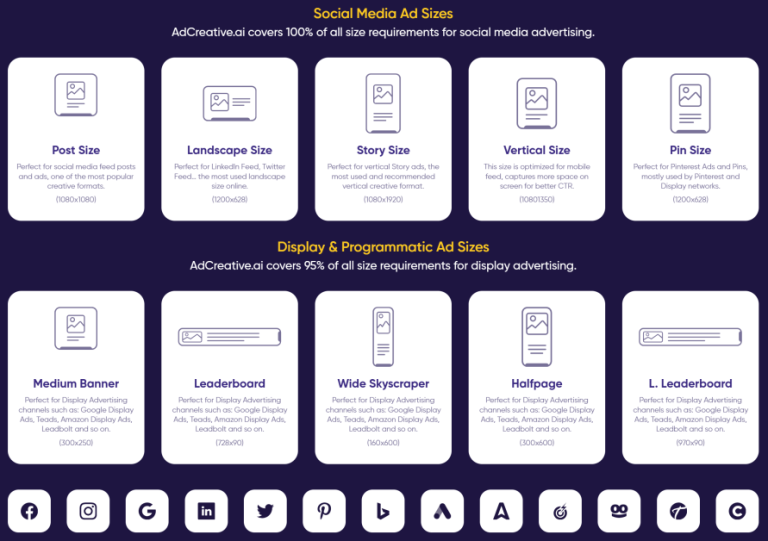
In the realm of digital advertising, leveraging AI-powered tools to generate diverse ad variations has become essential for optimizing campaign performance and reaching target audiences effectively. This section explores the most popular platforms that facilitate automated ad creation, enabling marketers to streamline their workflows and produce high-quality, engaging advertisements with minimal manual effort.
Understanding the features, costs, and usability of these platforms allows marketers to select the most suitable solution aligned with their budget and technical proficiency. By comparing different tools, businesses can identify optimal options for their specific needs, ensuring efficient ad variation generation that enhances campaign ROI.
Popular AI Tools and Software for Creating Ad Variations
Several AI tools have gained prominence due to their robust features, user-friendly interfaces, and ability to generate multiple ad variations rapidly. These platforms typically integrate advanced natural language processing and creative automation to assist marketers in developing compelling ads tailored to diverse audiences.
| Tool/Platform | Key Features | Pricing | Usability |
|---|---|---|---|
| AdCreative AI | Generates multiple ad variations including images, headlines, and descriptions; integrates with major ad platforms; offers AI-driven optimization suggestions. | Subscription plans start at $49/month; custom enterprise pricing available. | Intuitive dashboard suitable for marketers with limited technical skills. |
| Canva Pro with AI Features | Offers AI-assisted design templates; automates ad copy generation; supports multiple formats for social media and display ads. | $12.99/month per user; free tier available with limited features. | User-friendly with drag-and-drop functionality, suitable for all skill levels. |
| Copy.ai | Generates ad copy and headlines; supports multiple languages; includes A/B testing capabilities. | Starting at $36/month; free trial available. | Simple interface, designed for quick content creation without technical expertise. |
| Adext AI | Automates ad variation creation and optimization; integrates with Google and Facebook ads; employs machine learning for performance enhancement. | Pricing available upon request; often based on ad spend. | Requires minimal setup; advanced features suitable for experienced marketers. |
| Phrase | Offers content automation including ad variations; supports multi-channel campaigns; provides analytics and performance tracking. | Plans start at $99/month; custom enterprise options available. | Designed for marketing teams; requires some learning curve for advanced features. |
To utilize these tools effectively, marketers should follow a structured setup process. This begins with defining campaign goals and target audiences, followed by integrating existing ad assets or creative briefs into the chosen platform. Users should explore the platform’s customization options, such as adjusting tone, style, and format preferences, to align generated variations with branding guidelines. After generating initial ad sets, analyzing performance metrics and iterating based on insights will further refine the effectiveness of the variations, ensuring optimal ad performance across channels.
Designing Effective Explainings for AI Ad Generation
Creating clear and well-structured explainings is essential for guiding AI systems to generate relevant and high-quality ad variations. These explainings serve as instructions that communicate the campaign’s goals, target audience, and preferred content style to the AI, ensuring the output aligns with marketing strategies and brand voice. Well-crafted explainings can significantly enhance the efficiency of the ad creation process and improve the relevance of generated variations.
Effective explainings should be concise yet comprehensive, providing enough context for the AI to understand the desired outcome without overwhelming it with unnecessary details. They should also be adaptable to different ad formats, allowing marketers to customize instructions based on whether the content is text, images, or videos. Developing versatile templates enables consistent and efficient communication, allowing for rapid iteration across multiple campaigns and platforms.
Crafting Clear and Concise Explainings
The foundation of effective explainings lies in clarity and specificity. When instructing AI, it is crucial to define the key elements such as the target audience, campaign message, tone, and call-to-action. Using precise language helps prevent ambiguity, ensuring the AI produces variations that meet the campaign objectives. For example, instead of saying “Create an ad for a product,” a clearer instruction would be “Generate a catchy Facebook ad targeting young professionals promoting our new eco-friendly water bottles with a focus on sustainability and convenience.”
Use explicit language, specify the key message, and Artikel the expected tone and style to guide AI effectively.
Sample Explainings for Different Ad Formats
Different ad formats require tailored explainings to optimize the AI’s output. Providing format-specific instructions helps generate more relevant and engaging variations for each medium.
- Text Ads: Clearly specify the headline, description, and call-to-action. For example: “Generate a compelling Google search ad with a headline emphasizing affordability, a brief description highlighting free shipping, and a strong CTA encouraging purchases.”
- Image Ads: Describe the visual elements, style, and message. For instance: “Create an image ad featuring a smiling family using our eco-friendly cleaning products, with bright colors, a clean lifestyle vibe, and the slogan ‘Clean Naturally, Live Better.'” Include guidance on branding elements and any specific imagery.
- Video Ads: Artikel the narrative, tone, duration, and key visual or auditory cues. Example: “Develop a 30-second Instagram video demonstrating our workout apparel in action, emphasizing comfort and durability, with energetic background music and a call-to-action to visit our website.”
Templates for Customizable Explainings
To facilitate consistency and efficiency, marketers can develop templates that serve as a base for various campaigns. These templates should include placeholders for key variables such as product details, target demographics, tone, and format-specific instructions.
| Template Element | Description |
|---|---|
| Campaign Objective | A brief statement on what the ad aims to achieve (e.g., brand awareness, product launch, promotion). |
| Target Audience | Demographics, interests, and behaviors of the intended viewers or users. |
| Message Focus | Primary message or value proposition that needs to be communicated. |
| Tone and Style | Descriptive words or phrases indicating the desired tone (e.g., friendly, professional, energetic). |
| Format-Specific Details | Instructions tailored for text, image, or video ads, including visual cues, length, and call-to-action. |
| Example Placeholder | Insert specific product or campaign details here, such as “Eco-friendly water bottles for young professionals.” |
By filling in these templates with campaign-specific details, marketers can rapidly generate clear, consistent, and effective explainings that optimize AI output across diverse advertising formats.
Methods to Ensure Diversity and Relevance in Ad Variations
Creating a wide range of effective ad variations is crucial for capturing different audience segments and maximizing campaign performance. Ensuring diversity in ad outputs while maintaining message consistency allows marketers to test multiple creative approaches without diluting their core brand message. This process involves systematic methods to generate, evaluate, and refine ad variations, leveraging AI’s capabilities to streamline and optimize the development of diverse advertising assets.Maintaining relevance in these variations is equally important, as it ensures that each ad resonates with the targeted audience segment and aligns with campaign goals.
Balancing diversity and relevance requires thoughtful procedures, including iterative testing and creative angle exploration. These methodologies help identify the most impactful ad concepts and refine messaging strategies based on real-time data and performance insights, ultimately leading to more engaging and effective advertising campaigns.
Techniques for Diversifying Ad Outputs While Maintaining Message Consistency
To generate a broad spectrum of ad variations that remain aligned with the overarching campaign message, several techniques can be employed:
- Parameter Variations: Adjusting key input parameters in AI models—such as tone, style, or specific s—can produce diverse outputs. For example, varying the emotional tone from humorous to serious while keeping the core value proposition consistent allows for testing audience preferences.
- Template and Format Diversification: Using different ad formats or templates—such as carousel ads, video scripts, or static banners—expands creative variety. AI can generate content tailored to each format while conveying the same message, enhancing overall campaign reach.
- Segment-Specific Customization: Creating variations tailored to different audience segments involves customizing language, imagery, or messaging style based on demographic or behavioral data. AI can automate the adaptation process, ensuring relevance without losing consistency.
- Controlled Randomization: Incorporating controlled randomness in the generation process introduces subtle variations in phrasing or visual elements, fostering diversity while preserving the core message.
Procedures for Iterating and Refining Explainings to Enhance Variation Quality
Effective iteration and refinement are essential for improving the quality of AI-generated ad variations. The following procedures facilitate this process:
- Initial Generation and Evaluation: Generate multiple ad variations using different input parameters or templates. Evaluate these outputs based on predefined criteria such as clarity, engagement potential, and message coherence.
- Feedback Incorporation: Analyze performance data and audience responses to identify which variations resonate best. Use this insight to adjust input parameters or refine the explainings provided to the AI model.
- Controlled A/B Testing: Deploy selected variations in small-scale campaigns to measure effectiveness. Gather data on metrics like click-through rate, conversion rate, and engagement levels.
- Refinement Cycles: Based on testing results, iteratively modify the input instructions or creative angles. Fine-tune the AI prompts to emphasize successful elements and mitigate underperformers.
- Consistency Checks: Ensure that the core message remains intact across iterations by reviewing output against brand guidelines and campaign objectives during each refinement cycle.
Example Procedures for Testing Different Creative Angles with AI
Implementing creative angle testing involves systematic approaches to explore various perspectives and styles effectively:
- Develop Diverse Prompts: Craft distinct prompts emphasizing different creative angles, such as humor, urgency, emotional appeal, or authority. For example, one prompt might focus on highlighting product benefits humorously, while another emphasizes exclusivity and urgency.
- Generate Multiple Variations: Use AI to produce multiple ad copies or visual concepts based on each prompt. This ensures a broad set of creative options aligned with each angle.
- Evaluate and Prioritize: Assess each variation through qualitative reviews and quantitative testing. Criteria might include relevance, originality, and audience engagement potential.
- Test in Live Campaigns: Launch A/B tests for different angles within controlled segments. Monitor performance metrics to determine which creative perspective yields the best results.
- Iterate and Optimize: Refine prompts based on testing insights, focusing on the most promising angles. Continue iterative testing to improve and diversify creative approaches further.
Structuring Ad Variations Using HTML Tables
Creating well-organized ad variations within HTML tables enhances clarity and facilitates easy comparison across different ad formats, messages, and visuals. Proper structuring ensures that marketing teams can efficiently review multiple options simultaneously and select the most effective combinations for campaigns.
Utilizing HTML tables to arrange ad variations allows for a systematic presentation of diverse content elements such as ad copies, images, and calls-to-action. When designed thoughtfully, these tables can improve workflow, enable quick iterations, and support responsiveness across various devices, thereby maximizing the impact of AI-generated ads.
Organizing Multiple Ad Variations Within an HTML Table
To effectively display various ad variations, it is advisable to organize content into a table format with up to four columns. This layout offers a balance between comprehensive visibility and readability, ensuring that each variation is sufficiently detailed without overwhelming the viewer.
- Column Configuration: Assign each column to a specific ad element such as headline, image, description, or call-to-action. This structured approach helps in comparing how different combinations perform.
- Row Structure: Each row represents a distinct ad variation, containing all related elements aligned across columns for easy visual comparison.
- Consistent Formatting: Maintain uniform font sizes, padding, and alignment to ensure a clean and professional presentation.
Sample HTML Table Code for Ad Variations
<table style=”width:100%; border-collapse:collapse;”> <tr> <th style=”border:1px solid #ddd; padding:8px;”>Headline</th> <th style=”border:1px solid #ddd; padding:8px;”>Image</th> <th style=”border:1px solid #ddd; padding:8px;”>Description</th> <th style=”border:1px solid #ddd; padding:8px;”>Call-to-Action</th> </tr> <tr> <td style=”border:1px solid #ddd; padding:8px;”>Discover Amazing Deals</td> <td style=”border:1px solid #ddd; padding:8px;”>Image of a happy shopper with a shopping bag</td> <td style=”border:1px solid #ddd; padding:8px;”>Save big on your favorite products today!</td> <td style=”border:1px solid #ddd; padding:8px; text-align:center;”><a href=”#” style=”background-color:#4CAF50; color:white; padding:10px 20px; text-decoration:none; border-radius:4px;”>Shop Now</a></td> </tr> <tr> <td style=”border:1px solid #ddd; padding:8px;”>Upgrade Your Home</td> <td style=”border:1px solid #ddd; padding:8px;”>Image of modern furniture in a stylish living room</td> <td style=”border:1px solid #ddd; padding:8px;”>Transform your space with our exclusive furniture collection.</td> <td style=”border:1px solid #ddd; padding:8px; text-align:center;”><a href=”#” style=”background-color:#2196F3; color:white; padding:10px 20px; text-decoration:none; border-radius:4px;”>Browse More</a></td> </tr></table>
Designing for Responsive Accessibility
As ad variations are often viewed across different devices, responsiveness is critical to ensure accessibility and usability. Responsive design within HTML tables involves flexible layouts that adapt seamlessly to screen sizes, maintaining clarity and functionality.
- Use Percentage Widths: Setting table widths to 100% allows content to resize based on the device’s viewport, preventing overflow or excessive whitespace.
- Media Queries: Implement CSS media queries to adjust font sizes, padding, and layout structure for tablets, smartphones, and desktops.
- Accessible Markup: Include
scopeattributes in header cells and ensure that all images have descriptive alt text, promoting screen reader compatibility. - Stacked Layouts for Small Screens: For narrow screens, consider transforming tables into stacked layouts using CSS, where each ad variation appears as a vertical block for easier navigation.
Adopting these best practices not only enhances user experience but also aligns with accessibility standards, ensuring that AI-generated ad variations are effective and inclusive across all devices.
Creating Visual and Textual Variations for Different Platforms

Developing platform-specific ad variations is essential to maximize engagement and conversion rates across diverse digital channels. Each platform has unique audience behaviors, format specifications, and content preferences, which necessitate tailored approaches for both visual and textual elements. By customizing your ads to meet these platform-specific requirements, brands can ensure their messaging resonates effectively and adheres to technical standards, thereby enhancing overall ad performance.
Implementing effective methods for generating tailored ad copies and images involves understanding each platform’s audience dynamics, format constraints, and creative best practices. This strategic approach enables marketers to craft compelling, relevant, and platform-compatible ads that capture attention and motivate action. Matching ad formats to platform requirements ensures seamless integration into user feeds, stories, or search results, leading to improved visibility and engagement metrics.
Adapting Content for Facebook and Instagram
Facebook and Instagram, both owned by Meta, share many similarities but also exhibit distinct preferences in ad presentation. To optimize ads for these platforms, marketers should leverage their respective audience behaviors and format specifications.
- Visuals: Use high-resolution images and videos that are optimized for mobile viewing. For Facebook, square (1:1) or horizontal (16:9) formats perform well, while Instagram favors square (1:1), vertical (4:5), or stories-sized (9:16) visuals.
- Ad Copy: Craft concise, engaging text with a clear call-to-action. Incorporate hashtags and emojis on Instagram to enhance visual appeal, but maintain professionalism on Facebook with more detailed descriptions.
- Format Matching: Use Facebook’s Carousel for showcasing multiple products and Stories for time-sensitive promotions. For Instagram, leverage Explore ads, Stories, and Reels to reach diverse user segments.
Optimizing Google Ads for Search and Display
Google Ads encompass search, display, video, and app campaigns, each requiring specific ad formats and messaging strategies. Proper tailoring increases relevance and click-through rates.
- Search Ads: Focus on -rich headlines and descriptions. Use ad extensions like site links, callouts, and structured snippets to provide additional information without cluttering the core message.
- Display Ads: Develop visually appealing banners adhering to size specifications (e.g., 300×250, 728×90, 160×600). Use contrasting colors and clear imagery that align with the landing page and audience interests.
- Matching Format to Requirement: Ensure images and text are optimized for each ad size, and use dynamic ads for personalized content based on user behavior.
Refining Content for LinkedIn Ads
LinkedIn’s professional environment calls for polished, industry-specific messaging coupled with visually professional creatives. Ads should emphasize value propositions, thought leadership, or business benefits.
- Visuals: Use clean, professional images that reflect the industry or service offered. Incorporate branding elements subtly to reinforce brand recognition.
- Ad Copy: Focus on clear, concise messaging that appeals to decision-makers. Highlight unique selling points and include a compelling call-to-action tailored to a professional audience.
- Format Compatibility: Utilize Sponsored Content for native feed integration, InMail for personalized messages, and dynamic ads for personalized audience targeting, ensuring adherence to each format’s specifications.
Matching Ad Formats to Platform Specifications
Aligning ad formats with platform specifications involves understanding technical requirements such as dimensions, text limits, aspect ratios, and file sizes. This ensures that creatives display correctly and maintain visual integrity across devices.
Key best practice: Always refer to the latest platform guidelines for specifications to prevent ad rejection or suboptimal display quality.
For example, Facebook recommends images of at least 1080 x 1080 pixels for feed posts, while Instagram stories require 1080 x 1920 pixels. Google display ads should be designed in various sizes to maximize reach, and LinkedIn ads benefit from a professional, minimalistic design that fits within their 1200 x 627 pixel standard for Sponsored Content.
Automating the Generation and Management of Ad Variations
Efficient automation in the creation and handling of advertising variations is essential for scaling digital marketing campaigns effectively. Leveraging AI tools allows marketers to generate large volumes of diverse ad content rapidly, reducing manual effort and improving overall campaign agility. Proper management and systematic organization of these variations ensure seamless deployment across multiple platforms, maintaining consistency and relevance in advertising efforts.Implementing an automated workflow for ad variation generation involves integrating AI-powered content creation with campaign management systems.
This integration facilitates the batch processing of multiple ad variations, enabling marketers to focus on strategic optimization rather than manual content production. Additionally, organizing generated content into structured repositories ensures easy retrieval, updating, and deployment, significantly boosting operational efficiency in digital advertising.
Workflows for Batch Creation of Ad Variations Using AI Tools
Batch creation workflows using AI tools streamline the production process by automating repetitive tasks and enabling scalable output. The typical workflow includes the following steps:
- Input Definition: Clearly specify the parameters for ad variations, including target audience, key messages, product details, and platform-specific requirements.
- Content Generation: Utilize AI platforms such as GPT-based models, Copy.ai, or Jasper to generate multiple ad text variations simultaneously. These tools can produce diverse messaging styles, formats, and call-to-actions based on the input parameters.
- Creative Asset Integration: Where applicable, incorporate AI-generated visual assets or suggest image variations that complement the textual content, especially for visual-centric platforms like Instagram or Facebook.
- Quality Filtering: Apply filters or set quality criteria within the AI tools to screen out low-performing or irrelevant variations automatically, ensuring only high-quality options proceed to deployment.
- Review and Refinement: Conduct a review process where marketing teams can approve, modify, or discard generated variations, maintaining control over brand consistency.
This workflow ensures rapid, high-volume ad variation creation while maintaining quality standards, thus enabling agile campaign adjustments based on performance insights.
Techniques for Organizing and Storing Generated Variations for Easy Deployment
A structured organization system is crucial for managing large sets of ad variations efficiently. Effective storage and categorization allow marketing teams to quickly access, update, and deploy content tailored to specific campaigns or platforms.
- Centralized Repository: Establish a dedicated database or cloud storage system that houses all generated ad variations with clear metadata tags, including campaign name, platform, target audience, and creation date.
- Structured Naming Conventions: Use consistent naming schemes to facilitate searchability, such as including campaign ID, variation number, and content type (text, image, CTA).
- Categorization by Attributes: Organize variations based on key attributes like messaging tone, visual style, or platform suitability to streamline selection processes.
- Version Control: Implement versioning to track updates and modifications, ensuring that the most current and approved variations are in use.
- Automation Integration: Connect storage systems with ad management platforms via APIs, enabling automated retrieval and deployment of specific variations based on campaign needs.
Proper organization minimizes the risk of deploying outdated or irrelevant ads, ensuring campaign consistency and efficiency.
Step-by-Step Guide to Integrate AI-Generated Content into Ad Management Systems
Integrating AI-generated ad variations into existing campaign management ecosystems involves a systematic approach to ensure smooth operation and scalability:
- Establish Data Pipelines: Connect AI content generation tools directly to your content repository using APIs or automation scripts, allowing seamless data transfer.
- Metadata Tagging: Ensure each generated variation is automatically tagged with relevant metadata such as campaign, platform, target audience, and date for easy filtering.
- Implement Version Control: Use version control systems like Git or dedicated content management tools to monitor changes and updates effectively.
- Configure Deployment Triggers: Set rules within your ad management platform (e.g., Google Ads, Facebook Ads Manager) to automatically fetch specific variations based on campaign parameters or performance metrics.
- Automate Testing and Optimization: Incorporate A/B testing protocols where AI-generated variations are randomly assigned to audiences, and performance data feeds back into the system for iterative improvements.
- Monitor and Maintain: Continuously oversee the integration pipeline, ensuring data accuracy and system reliability, and update workflows as needed for emerging platform requirements or new AI capabilities.
By following these steps, organizations can maximize the efficiency of their ad variation workflows, reducing manual intervention and allowing data-driven optimization to thrive across all advertising channels.
Best Practices for Testing and Optimizing AI-Generated Ads
Effective testing and optimization are crucial to maximizing the performance of AI-generated advertising campaigns. By systematically evaluating different ad variations and refining them based on data-driven insights, marketers can significantly improve engagement, click-through rates, and conversions. Implementing structured testing frameworks ensures continuous improvement and better return on investment for AI-powered ad strategies.In the dynamic landscape of digital advertising, leveraging best practices for testing and optimization allows marketers to adapt quickly to audience preferences and platform-specific nuances.
These practices help in identifying the most compelling ad elements and in fine-tuning messaging, visuals, and calls-to-action to resonate with target audiences.
Methods for Efficient A/B Testing of Ad Variations
Conducting effective A/B tests involves a strategic approach to compare different ad versions systematically. The goal is to isolate specific variables—such as headlines, images, or ad copy—and determine their impact on performance metrics.To ensure efficiency, it is important to:
- Define clear objectives and key performance indicators (KPIs) such as click-through rate (CTR), conversion rate, or cost per acquisition (CPA).
- Segment the target audience properly to ensure each variation is tested against a representative sample, minimizing bias and confounding factors.
- Limit the number of variations in a single test to avoid data dilution, focusing on one or two variables at a time for clarity.
- Use automated testing tools integrated within advertising platforms, which facilitate rapid deployment and real-time monitoring.
- Allocate sufficient budget and run tests for an adequate period to gather statistically significant data, typically a minimum of one to two weeks depending on traffic volume.
Analyzing Performance Data for Selecting Top-Performing Variations
Analyzing performance data involves examining metrics that reflect user engagement and conversion efficiency. The process includes collecting data from ad platforms, interpreting results accurately, and applying insights to inform future ad development.Key steps include:
- Utilize platform analytics dashboards to review performance metrics such as CTR, conversion rate, bounce rate, and cost metrics.
- Compare variations based on statistically significant differences rather than mere numerical disparities, ensuring confidence in decision-making.
- Apply visualization tools like charts and heatmaps to identify patterns and correlations between ad elements and performance outcomes.
- Calculate metrics like lift, which measures the percentage improvement of one variation over another, to quantify success clearly.
- Identify underperforming variations for elimination or reworking and highlight high-performers as models for future campaigns.
“Data-driven decision-making enables marketers to optimize ad spend and enhance campaign effectiveness through precise adjustments.”
Procedures for Continuous Improvement via Iterative AI Explainings
Ongoing optimization relies on iterative processes where insights from performance analysis inform subsequent AI explainings and ad variations. This cyclic approach ensures that AI models evolve to generate increasingly relevant and compelling ads.Procedures include:
- Review the performance data to identify areas where variations underperform or could be improved.
- Refine the parameters and content prompts used for AI generation, emphasizing elements that showed positive results or correcting those that did not.
- Implement new ad variations based on these refined prompts and test them against previous iterations to gauge improvements.
- Employ machine learning algorithms that adapt based on accumulated data, automatically adjusting generation strategies for better relevance.
- Maintain a feedback loop where insights from human analysts and AI outputs inform each other, fostering a cycle of continuous learning and enhancement.
“Iterative optimization maximizes the potential of AI-generated ads, ensuring each cycle produces more targeted and effective campaigns.”
Concluding Remarks

Mastering how to generate ad variations with AI empowers you to create more diverse, relevant, and engaging advertisements with greater efficiency. By implementing these techniques and leveraging the right tools, you can significantly improve your campaign performance and stay ahead in the competitive digital landscape. Embracing AI-driven ad creation is a strategic step toward sustained marketing success.