Discover how to create LinkedIn posts with AI that enhance your professional presence and boost engagement. Leveraging AI tools for content creation offers a strategic advantage by streamlining the process of generating compelling and tailored posts tailored to your target audience. This approach not only saves time but also enriches your social media strategy with innovative and diverse content formats.
Through a structured setup of AI tools, crafting precise explainings, and employing best practices for content structuring and visual integration, you can elevate your LinkedIn posts efficiently. This guide provides comprehensive insights into optimizing AI assistance to produce captivating, personalized, and impactful LinkedIn content.
Understanding the Role of AI in Creating LinkedIn Posts
Artificial Intelligence has emerged as a transformative tool in the realm of professional networking, particularly on platforms like LinkedIn. By leveraging AI, professionals and marketers can streamline the process of crafting compelling, relevant, and engaging content that resonates with their target audience. This integration not only enhances productivity but also elevates the quality of social media communication, enabling users to maintain a consistent and impactful online presence.
AI assists in generating LinkedIn content by analyzing large datasets, understanding trending topics, and identifying the tone and style that best suit a professional audience. This technology can craft posts that are both personalized and aligned with current industry conversations, ensuring that each message adds value and fosters engagement. As a result, users can focus more on strategic interactions and relationship building, rather than solely on content creation.
Assistance of AI in Generating Engaging Content
AI tools utilize natural language processing (NLP) and machine learning algorithms to create high-quality LinkedIn posts that capture attention. These tools can suggest topics, draft compelling headlines, and even tailor the messaging to specific industries or professional roles. For instance, AI can generate posts about recent industry trends, share insightful commentary, or announce professional achievements with a tone that balances professionalism and approachability.
By analyzing audience engagement data, AI can also optimize the timing and format of posts to maximize visibility and interaction. This ensures that content is not only relevant but also strategically positioned to reach the right audience at the right moment, boosting overall engagement metrics and fostering meaningful connections.
Benefits of Using AI for Professional Social Media Posts
Implementing AI in LinkedIn content creation offers numerous advantages that support personal branding and corporate marketing efforts. These benefits include:
- Time Efficiency: Automating content generation reduces the time spent brainstorming and drafting posts, allowing users to allocate more time to engagement and networking.
- Enhanced Creativity: AI can suggest innovative ideas and different perspectives, helping users craft diverse and compelling content that stands out.
- Consistency and Frequency: AI tools facilitate regular posting schedules by providing ready-to-publish content, maintaining a steady online presence.
- Data-Driven Insights: AI analyzes engagement patterns to inform future content strategies, ensuring posts are aligned with audience preferences.
Moreover, AI can assist in maintaining a professional tone, avoiding common pitfalls such as overly promotional language or irrelevant content, thus fostering trust and credibility among connections and followers.
Types of Content Suitable for AI Assistance on LinkedIn
Several categories of LinkedIn content benefit significantly from AI support, particularly those that require frequency, personalization, or trend relevance. These include:
- Industry Updates and News: AI can curate and summarize the latest developments, ensuring your audience stays informed with minimal effort.
- Thought Leadership and Commentary: Generating insightful opinions or analyses on current topics helps establish authority, with AI assisting in framing clear and impactful messages.
- Event Announcements and Invitations: AI can craft professional and engaging invitations or summaries for webinars, conferences, or workshops.
- Achievements and Milestones: Sharing personal or organizational accomplishments becomes easier with AI tools that help articulate success stories compellingly and professionally.
- Engagement Posts: Questions, polls, or discussion starters designed to encourage interaction can be optimized for maximum response through AI suggestions.
While AI enhances the efficiency and quality of these content types, it is important to review and personalize generated posts to ensure alignment with your authentic voice and specific objectives, maintaining genuine connections with your audience.
Setting Up AI Tools for LinkedIn Content Creation
Effective utilization of AI tools for creating compelling LinkedIn posts begins with selecting the appropriate software and configuring it to align with your content strategy. Proper setup ensures that the AI can generate relevant, engaging, and professional drafts tailored to your target audience, saving time and maintaining consistency across your posts.
Configuring AI writing tools involves understanding their features, customizing settings to match your tone and style preferences, and integrating them seamlessly with your existing workflow. This foundational step is crucial to maximize the potential of AI-driven content creation and to produce posts that resonate well with your LinkedIn network.
Selecting and Configuring AI Writing Tools
Choosing the right AI tools depends on your specific needs, budget, and technical proficiency. Many AI writing platforms offer a range of features, from simple text generation to advanced customization options. It is advisable to evaluate tools based on their ability to produce coherent, contextually relevant content, and their flexibility in style adjustment.
- Research available options: Review popular AI writing tools such as Jasper, Writesonic, Copy.ai, and Article Forge. Consider their features, user reviews, and compatibility with your devices.
- Assess feature suitability: Prioritize tools that allow tone customization, integration, and style adjustments to match your professional voice on LinkedIn.
- Sign up and explore demos: Many platforms offer free trials or demos. Test these to gauge ease of use and quality of output.
- Configure settings: Adjust preferences such as language, tone, maximum length, and prompts within the tool’s interface to align with your content goals.
- Integrate with workflow: Connect your AI tool with LinkedIn or your content management system via APIs or browser extensions if available, to streamline content publishing processes.
Integrating AI Tools with LinkedIn Accounts
Seamless integration of AI tools with LinkedIn enhances efficiency by allowing direct posting or easy transfer of generated content. Establishing a reliable connection involves confirming compatibility, securing account permissions, and setting up automation where possible.
- Check compatibility: Confirm that your chosen AI platform supports LinkedIn integration through native features or third-party connectors.
- Authorize access: Grant necessary permissions within your LinkedIn account to enable the AI tool to access posting features while maintaining security protocols.
- Use automation tools: Leverage third-party automation platforms such as Zapier or Integromat to connect AI-generated drafts directly to LinkedIn scheduling and publishing tools, ensuring consistent content delivery.
- Test connections: Conduct initial test runs to verify that the AI-generated content uploads correctly and appears as intended on your LinkedIn timeline.
Organizing the Input for Post Draft Generation
Providing clear, structured input to your AI tools is vital for generating high-quality LinkedIn post drafts. Well-organized prompts enable the AI to understand your objectives, target audience, and desired tone, resulting in more relevant and engaging content.
- Define your content objectives: Clarify whether the post aims to inform, engage, promote, or establish thought leadership, and communicate this explicitly within your prompts.
- Include relevant s and themes: Mention specific topics, hashtags, or s to guide the AI in generating contextually appropriate content.
- Specify tone and style preferences: Indicate whether the tone should be professional, friendly, inspirational, or technical, ensuring consistency with your personal or brand voice.
- Provide contextual details: Share background information, recent achievements, or industry insights that should be incorporated into the draft for authenticity and relevance.
- Use formatted prompts: Structure your input using clear headings or bullet points to help the AI distinguish different content elements and produce cohesive drafts.
Crafting Effective Explaining for AI-Generated LinkedIn Posts
Creating clear and detailed explanations for AI to generate LinkedIn content is essential to ensure the output aligns with your communication goals. Well-structured explainings enable the AI to produce engaging, targeted, and versatile posts that resonate with your audience while maintaining your brand voice. By specifying audience profiles, tone, content formats, and strategic elements such as hashtags and calls-to-action, you can significantly enhance the quality and relevance of AI-generated LinkedIn content.Effective explainings serve as comprehensive instructions that guide AI models in understanding the context, style, and structural elements needed in each post.
Clear directives help in minimizing misunderstandings and in achieving consistency across your social media campaigns. As AI tools evolve, the importance of detailed and precise instructions increases, ensuring that automated content remains aligned with your organizational voice and objectives.
Designing Target Audience and Tone of Voice Specifications
Providing explicit details about your target audience and preferred tone is critical for generating relatable and impactful LinkedIn posts. When instructing AI, specify demographic attributes such as industry, experience level, geographic location, and professional interests. For example, directing AI to craft posts aimed at “mid-level marketing professionals in North America interested in digital transformation” helps it tailor language and examples appropriately.The tone of voice should reflect your brand personality and communication style.
Whether aiming for professional, friendly, authoritative, or casual, clearly articulate this preference. For instance, instruct AI to adopt a “professional yet approachable tone suitable for thought leadership articles” or “friendly and motivational tone suitable for startup communities.” This ensures the generated content maintains consistency and appeals effectively to the intended audience.
Enabling AI to Produce Diverse Content Formats
Leveraging AI to generate various content formats enhances engagement and allows for better content storytelling. When designing explainings, include instructions for producing text in multiple formats such as paragraphs, bullet points, or tables, depending on the content’s purpose.For example, specify that product features or data comparisons should be formatted as tables to improve clarity. Bullet points are effective for listing key benefits or steps, making the content scannable for busy professionals.
Use detailed instructions like:
“Generate a LinkedIn post highlighting three main benefits of our SaaS platform in bullet points, followed by a concise paragraph that summarizes the key takeaways.”
or, for data presentation:
“Create a table comparing our service with competitors based on pricing, features, and customer support.”
This guidance allows AI to adapt the presentation style to match the content type and maximize reader engagement.
Structuring Explainings to Incorporate Hashtags, Call-to-Actions, and s
Incorporating strategic elements such as hashtags, call-to-actions (CTAs), and s into your explainings ensures the generated posts are optimized for visibility and engagement on LinkedIn. Clearly instruct AI to embed relevant hashtags that align with trending topics, niche communities, or your industry s. For example, specify:
“Include hashtags like #DigitalMarketing, #AI, and #Leadership to increase post discoverability.”
Adding effective CTAs guides your audience toward desired actions, such as visiting your website, downloading a resource, or engaging with the post through comments. Provide explicit instructions:
“End the post with a compelling CTA encouraging readers to download our free guide or contact us for a consultation.”
s should be seamlessly integrated within the content to improve and relevance. Clearly identify the primary s for each post, such as “AI-driven marketing solutions” or “leadership development,” and instruct AI to naturally incorporate these terms into the text. Structured explainings that combine these elements help produce comprehensive, engaging, and optimized LinkedIn posts that effectively reach and influence your target audience.
Structuring LinkedIn Posts with AI Assistance
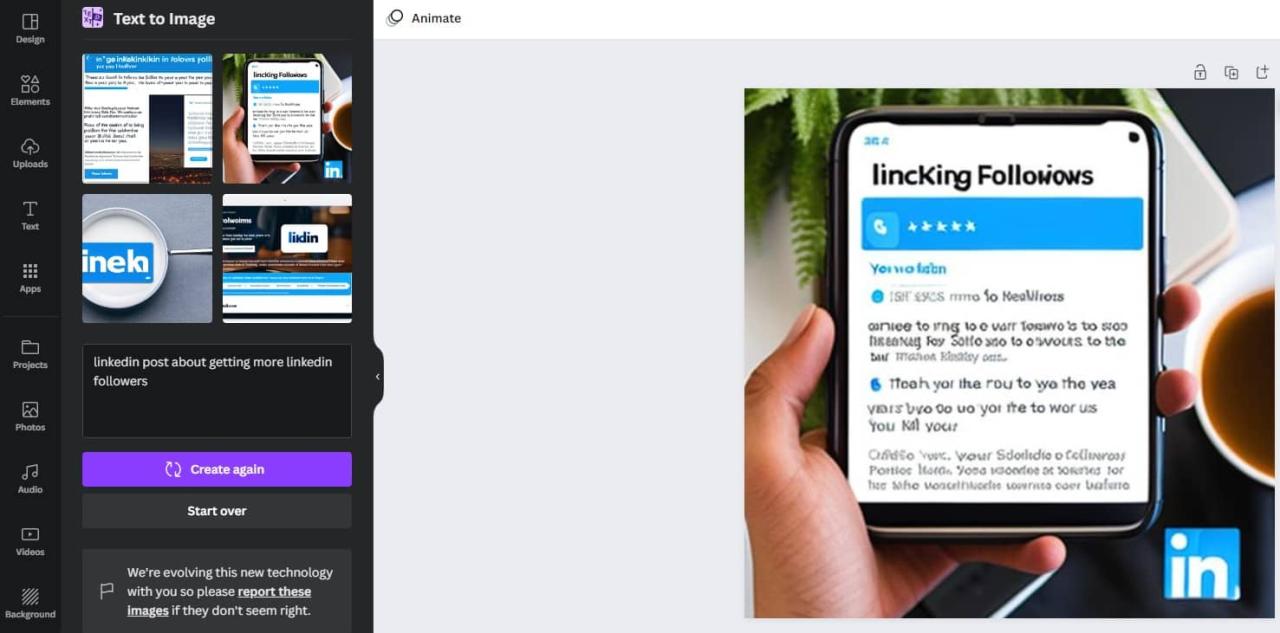
Creating well-organized LinkedIn posts is essential to engage your audience effectively and communicate your message clearly. Leveraging AI tools can streamline this process by helping you arrange ideas logically and present information in a compelling format. Proper structuring ensures your content is easily digestible, encourages interaction, and reinforces your professional presence on the platform.An effective AI-assisted structure involves breaking down complex topics into main ideas supported by relevant subpoints, utilizing headings, subheadings, lists, and tables to enhance clarity.
By instructing AI to recognize key themes and group related information accordingly, you can generate posts that are both informative and visually appealing. Incorporating structured formats like tables further allows for a comparative presentation of data, making insights more accessible to your audience.
Organizing Main Ideas and Supporting Points
Establishing a clear hierarchy of ideas is fundamental for creating impactful LinkedIn posts. When guiding AI, specify the primary message or theme you want to convey, then identify supporting points that elaborate or provide evidence. AI can assist by automatically clustering related information under relevant headings, ensuring logical flow and coherence.To achieve this, feed the AI with an Artikel of your main concept alongside detailed supporting points.
The AI can then generate a post where each main idea is introduced with a heading or subheading, followed by bullet points or numbered lists that expand on each supporting point. This approach not only clarifies your message but also allows readers to scan content quickly for key takeaways.
Sample Explaining with Headings, Subheadings, and Lists
Consider a topic such as “Benefits of AI in Content Creation.” A well-structured AI-generated post might include:
AI-Generated LinkedIn Post Example
Benefits of AI in Content Creation
This post highlights how AI tools optimize content development, enhance engagement, and streamline workflows.
Introduction
Integrating AI into your content strategy can drastically improve efficiency and effectiveness. Here are the key benefits to consider:
Main Benefits
- Increased Productivity: Automate routine tasks such as drafting and editing, saving time for strategic activities.
- Enhanced Creativity: Use AI to generate innovative ideas and diverse content formats that resonate with your audience.
- Data-Driven Insights: Leverage AI analytics to understand audience preferences and optimize future posts.
Supporting Data
html table tags
| Feature | Benefit | Example |
|---|---|---|
| Automated Drafting | Speeds up content creation process | AI tools like Jasper or Copy.ai generate initial drafts within minutes |
| Content Personalization | Improves engagement rates | Tailoring posts based on audience demographics and interests |
| Performance Analytics | Refines future content strategies | AI dashboards provide real-time feedback and suggestions |
Formatting Data with Tables for Clarity
Tables serve as an effective method to compare data points, display structured information, or summarize complex topics within LinkedIn posts. When instructing AI, specify that certain sets of data or options should be presented in tabular form, highlighting relationships or differences clearly.For example, comparing AI tools’ features or pricing models can be efficiently achieved with a well-designed table. Incorporating tables not only enhances readability but also allows your audience to grasp critical insights quickly, increasing the overall impact of your LinkedIn content.
Enhancing Engagement Through AI-Optimized Content
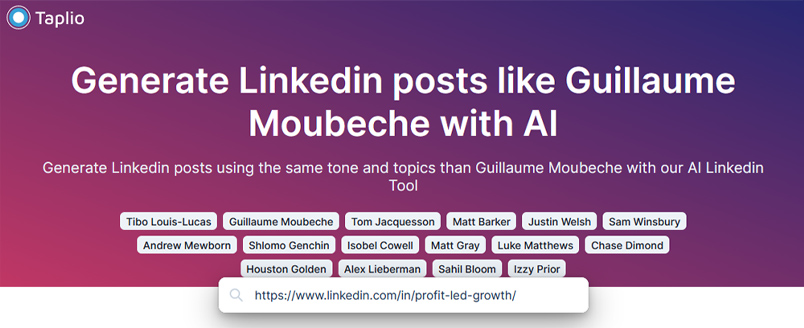
Creating LinkedIn posts that resonate deeply with your audience is essential for building meaningful connections and achieving your professional goals. Leveraging AI tools for content creation offers innovative ways to craft compelling narratives, evoke emotional responses, and encourage active participation. By focusing on AI-optimized strategies, professionals can transform their LinkedIn presence into a dynamic platform for engagement, conversation, and influence.
Effective AI-driven content not only captures attention but also fosters interaction through personalized storytelling, emotional appeal, and strategic questions. These techniques help to humanize your posts, making your messages more relatable and memorable. Incorporating various methods to enhance engagement ensures your content stands out in the crowded LinkedIn feed, driving higher visibility, connection requests, and meaningful comments.
Techniques for AI to Craft Compelling Narratives and Stories
Utilizing AI to develop engaging stories requires a combination of data-driven insights and creative input. AI algorithms can analyze trending topics, audience preferences, and successful storytelling structures to generate narratives that resonate deeply. For instance, AI can identify common challenges faced by your target audience and craft stories illustrating how your solutions effectively address those issues.
Additionally, AI can assist in constructing a narrative flow that maintains interest from start to finish. It can suggest hooks, build suspense, and deliver resolutions that align with your messaging goals. Embedding real-life case studies or testimonials within stories enhances credibility and relatability, making your posts more compelling and shareable.
Adding Emotional Appeal and Personalization to Posts
Incorporating emotional elements into AI-generated content amplifies audience engagement by fostering empathy and personal connection. AI tools can analyze language patterns and sentiment to recommend phrases that evoke feelings such as inspiration, gratitude, or motivation. Personalization further tailors content to individual preferences, increasing the likelihood of engagement.
For example, AI can help craft posts that acknowledge specific achievements or challenges faced by your audience, making your communication feel more tailored and sincere. Using storytelling techniques that highlight vulnerability or triumph can inspire and motivate readers, strengthening their connection to your message and your brand.
Organizing Methods to Include Questions and Explanations for Audience Interaction
Encouraging audience participation is vital for fostering a vibrant LinkedIn community. AI tools can strategically incorporate questions and prompts within posts that stimulate discussion and feedback. It is important to frame these questions in a way that invites genuine responses, such as seeking opinions, sharing experiences, or requesting advice.
Embedding open-ended questions, polls, or calls-to-action within your content creates opportunities for dialogue. AI can suggest relevant prompts based on trending topics or previous engagement patterns, ensuring your questions align with your audience’s interests. Additionally, providing explanations or context around these questions makes it easier for readers to engage thoughtfully and confidently.
Effective AI-optimized LinkedIn content combines storytelling, emotional resonance, and interactive prompts to foster meaningful engagement and build lasting professional relationships.
Incorporating Visual Elements and Descriptive Imagery
Creating compelling LinkedIn posts involves more than well-crafted text; integrating visual elements significantly enhances engagement and message clarity. Effective use of imagery and descriptive visuals can transform a plain post into an eye-catching and informative piece that resonates with your audience. Leveraging AI tools to generate and suggest visuals ensures that your content remains visually appealing and aligned with your messaging, ultimately boosting viewer interaction and sharing potential.Visual elements serve as a universal language that complements written content, making complex ideas more digestible.
When used effectively, images, infographics, and diagrams can illustrate statistics, processes, or concepts with clarity and immediacy. AI-driven tools can assist in generating detailed descriptions for visuals, ensuring that each image or infographic precisely reflects the core message of your post. These descriptions also facilitate accessibility, allowing users with visual impairments to understand the content through descriptive alt-text generated by AI.AI can suggest relevant images or visual themes that complement your post’s topic, based on s or context analysis.
For instance, if your post discusses data analytics, AI might recommend infographics showing data flowcharts or charts. Such suggestions save time and ensure visual consistency across your content, maintaining branding and thematic coherence. Embedding descriptive explanations within your posts provides viewers with a richer understanding, encouraging deeper engagement and interaction.
Generating Detailed Descriptions for Visuals and Infographics
Detailed descriptions ensure that visuals effectively support your message and are accessible to a broader audience. AI can analyze your post’s content to craft comprehensive descriptions that highlight the visual’s key elements, colors, symbols, and data points.For example, an AI-generated description for an infographic on renewable energy might read:
“A colorful pie chart illustrating the global energy mix in 2023, with renewable sources such as solar (represented by a bright yellow sun icon), wind (depicted as wind turbines in blue), and hydro (shown as blue water waves), dominating 45% of the total energy consumption. The remaining 55% includes fossil fuels, represented by grey oil drops.”
Such detailed descriptions help viewers understand the visual context, especially when images cannot be displayed or for accessibility purposes.AI tools can also suggest visual content based on text analysis, ensuring that each graphic aligns with the post’s core message. For example, if your post emphasizes innovation in AI, AI may recommend futuristic imagery like digital brain networks, circuit boards, or abstract technological patterns.
Embedding Descriptive Image Explanations Within Posts
Embedding clear and descriptive explanations within your LinkedIn posts enhances user engagement by providing context and clarity. It transforms static visuals into stories that complement your narrative, making your message more memorable.To achieve this, incorporate brief yet detailed descriptions directly into your post, either before or after the visual element. For example:
“This infographic illustrates the rapid growth of electric vehicle adoption worldwide, highlighting key regions such as Europe and Asia. The chart displays a 30% increase in EV registrations over the past year, emphasizing the shift toward sustainable transportation.”
This approach allows readers to grasp the significance of visuals without needing to interpret complex graphics themselves. It also caters to diverse audiences, including those with visual impairments, when AI-generated alt-text is used.Embedding descriptive explanations encourages viewers to pay closer attention to visuals, fostering curiosity and deeper understanding. When combined with AI’s ability to suggest fitting imagery, this strategy makes your LinkedIn posts more compelling, informative, and engaging for professional audiences.
Reviewing and Editing AI-Generated Content
Effective review and editing of AI-generated LinkedIn posts are essential to ensure the content aligns with professional standards, maintains the appropriate tone, and effectively communicates the intended message. While AI tools can produce substantial drafts quickly, human oversight guarantees clarity, consistency, and personalization, which are vital for engaging a professional audience. This process involves evaluating the initial outputs critically and refining them to enhance their quality before publication.Thorough reviewing and editing not only improve readability but also help in maintaining the authenticity and voice of the individual or brand.
It ensures that the tone remains professional, friendly, and aligned with the target audience’s expectations. Additionally, editing allows for the correction of any factual inaccuracies, awkward phrasing, or irrelevant content, thereby elevating the overall impact of the post.
Guidelines for Evaluating AI-Created Posts for Tone and Clarity
When assessing AI-generated LinkedIn posts, it is crucial to focus on the tone and clarity to ensure the content resonates effectively with the audience and conveys the intended message clearly. Here are key guidelines to follow:
- Maintain a Consistent Tone: Ensure the post’s tone aligns with your personal or brand voice. For professional contexts, a friendly yet authoritative tone is often appropriate. Avoid overly casual language or jargon that might alienate your audience.
- Verify Clarity of Message: The core message should be easily understandable. Remove verbose or ambiguous sentences that could confuse readers. Clear, concise language enhances engagement.
- Check for Logical Flow: The ideas should progress logically, with proper transitions. Rearrange sentences or paragraphs if necessary to improve coherence.
- Assess Readability: Use simple sentence structures and avoid complex vocabulary unless suitable for your audience. Break long paragraphs into shorter, digestible segments.
- Review for Consistency: Ensure terminology, style, and tone remain consistent throughout the post. This consistency reinforces brand identity and professionalism.
Designing Explaining and Refining Initial Drafts
Refining AI-generated content involves a systematic approach to enhance clarity, engagement, and professionalism. The process begins with analyzing the initial draft for key areas needing improvement and applying targeted adjustments. This iterative process helps transform a generic output into a polished and personalized post that aligns with your voice.Begin by reading the draft critically, noting areas where the message is unclear or overly verbose.
Focus on simplifying language without losing essential information. Incorporate additional insights or examples to enrich the content. Use highlighting techniques such as bolding or italics to emphasize critical points or call-to-action statements. Additionally, consider the context and timing of your audience’s interests, adjusting the tone and content accordingly. For example, if the post discusses recent industry trends, ensure the explanations are relevant, concise, and backed by credible data or examples.
Organizing Procedures for Customizing AI Outputs to Match Personal or Brand Voice
Customizing AI outputs to reflect your unique voice or brand persona involves a series of structured steps that refine the initial AI suggestions:
- Define Your Voice and Style Guidelines: Clearly articulate your preferred tone, vocabulary, and style. Reference previous successful posts to identify recurring language patterns or stylistic nuances.
- Use Prompt Engineering: When generating content, craft prompts that specify tone, style, and target audience preferences. For example, instruct the AI to adopt a professional and approachable tone or to incorporate specific jargon relevant to your industry.
- Implement Fine-tuning or Custom Models: For organizations with advanced needs, consider fine-tuning AI models on your existing content corpus. This ensures outputs naturally reflect your voice and style nuances.
- Manual Adjustments Post-Generation: After receiving AI suggestions, manually modify the language, sentence structure, and vocabulary to better match your personal or brand identity. Pay attention to consistent phrasing and stylistic elements.
- Establish Review Cycles: Regularly review AI-generated content and update your prompt structures and style guidelines based on feedback. This iterative process improves the AI’s ability to produce aligned content over time.
Effective customization ensures AI-generated content feels authentic and consistent, reinforcing your professional or brand identity across all LinkedIn posts.
Publishing and Scheduling AI-Assist LinkedIn Posts
![[FREE] Free AI linkedin post generator | No Sign-Up, Unlimited](https://teknokrat.web.id/wp-content/uploads/2025/09/ai-linkedin-post-maker-row-4-1024x731-1.jpg "[FREE] Free AI linkedin post generator | No Sign-Up, Unlimited")
Formatting AI-Generated Content for Publishing
Once your AI tool has crafted a compelling LinkedIn post, the next step is to prepare the content for publishing to ensure clarity, professionalism, and readability. Proper formatting not only enhances visual appeal but also facilitates better audience comprehension and interaction.
- Review the AI-generated text for grammatical accuracy, tone consistency, and relevance to your target audience.
- Break long paragraphs into shorter, digestible sections to improve readability, especially on mobile devices.
- Utilize bullet points or numbered lists to emphasize key points and make the content scannable.
- Incorporate relevant hashtags, mentions, and call-to-actions to increase reach and engagement.
- Ensure proper line spacing and paragraph separation to prevent cluttered appearance.
- Embed or attach visual elements, such as images or infographics, that complement the text to boost visual interest.
Adopting these formatting practices helps maintain a professional tone and ensures your content aligns with LinkedIn’s content standards, increasing the likelihood of your post resonating with your audience.
Scheduling Posts within LinkedIn and Third-Party Tools
Effective scheduling allows you to publish content at optimal times, reaching your audience when they are most active. LinkedIn offers native scheduling features, and various third-party tools provide advanced scheduling options, analytics, and automation capabilities.
- Using LinkedIn’s native scheduling:
Once creating a post, click on the calendar icon or select the scheduling option. Choose the desired date and time for publication. This method is straightforward and integrated within the platform.
- Employing third-party scheduling tools:
Platforms like Hootsuite, Buffer, or Sprout Social enable bulk scheduling, content calendar management, and performance tracking. After connecting your LinkedIn account, upload and configure posts according to your preferred schedule.
- Best practices for scheduling:
Plan your posts to coincide with peak engagement times, typically early mornings, lunch hours, or early evenings on weekdays. Use analytics insights to identify your audience’s most active periods.
Integrating AI-generated content with effective scheduling tools ensures consistent posting, enhances audience engagement, and saves time in content management.
Best Practices for Timing and Frequency of AI-Produced Content
Strategic timing and regular posting are key to maintaining visibility and fostering ongoing engagement on LinkedIn. Leveraging analytics and understanding your audience’s behavior can inform optimal posting schedules.
- Maintain a consistent posting frequency, such as three to five times per week, to keep your audience engaged without overwhelming them.
- Align posting times with when your audience is most active, which can vary based on industry, region, and professional role. For example, B2B audiences often engage more during weekdays and business hours.
- Utilize LinkedIn analytics or third-party tools to monitor engagement metrics and adjust your timing accordingly. For instance, if data shows higher interaction on Tuesday mornings, prioritize posting then.
- Balance content types throughout the week, mixing thought leadership, industry updates, and interactive posts to sustain interest.
- Leverage AI’s capabilities to generate timely content around trending topics or industry events, ensuring relevance and immediacy.
By adhering to these best practices, you ensure your AI-assisted LinkedIn posts reach the right audience at the right time, fostering meaningful engagement and expanding your professional network effectively.
Final Thoughts
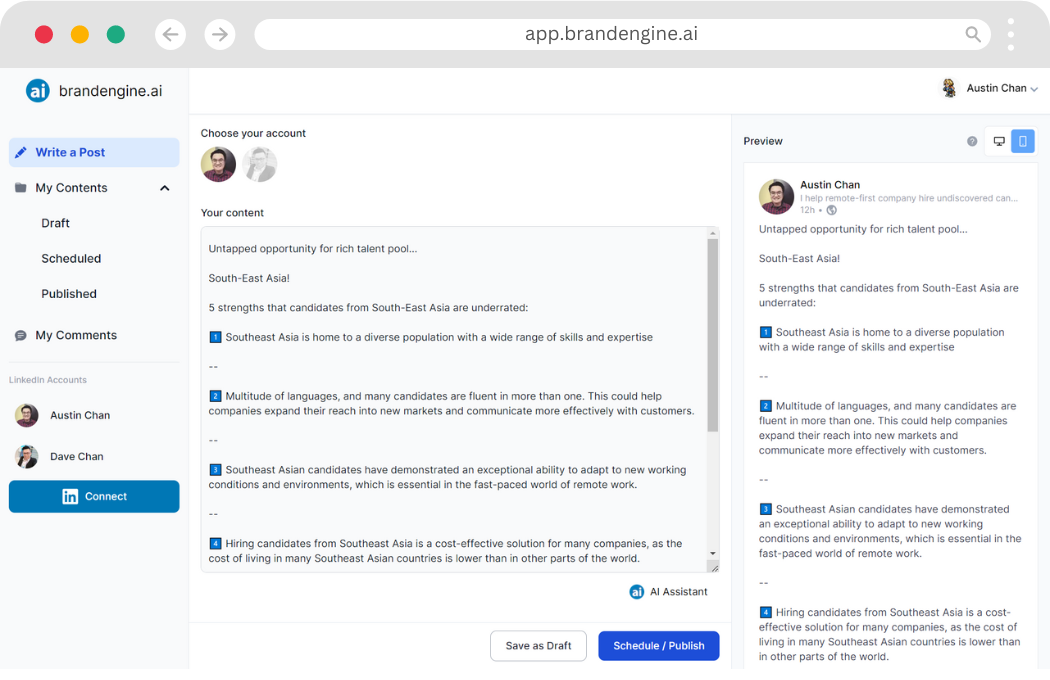
In conclusion, mastering the art of creating LinkedIn posts with AI empowers professionals to produce engaging content effortlessly and consistently. By integrating effective strategies and tools, you can ensure your posts resonate with your audience, foster meaningful interactions, and strengthen your professional brand across LinkedIn.