Discovering how to generate Instagram ad captions using AI opens new avenues for streamlining your social media marketing efforts. By leveraging advanced AI tools, businesses can craft engaging, relevant, and compelling captions that resonate with their target audience while saving time and resources. This innovative approach not only enhances creative output but also ensures consistency across campaigns, making your brand stand out in a crowded digital landscape.
This guide provides a comprehensive overview of selecting suitable AI platforms, preparing input data, crafting tailored explanations, and optimizing captions for maximum impact. From organizing content parameters to refining generated text, you’ll learn how to harness AI effectively to elevate your Instagram advertising strategy.
Overview of Generating Instagram Ad Captions Using AI
In the rapidly evolving landscape of social media marketing, crafting compelling and engaging captions is crucial for capturing audience attention and driving engagement. Artificial Intelligence (AI) has emerged as a powerful tool to automate and enhance this process, enabling marketers to produce captivating content efficiently. Leveraging AI for generating Instagram ad captions allows brands to maintain consistency, experiment with various styles, and optimize messaging based on data-driven insights.
AI-driven caption generation involves utilizing advanced language models and machine learning algorithms that analyze context, target audience preferences, and trending themes to create relevant and persuasive text. This automation reduces the time and effort required to brainstorm and write captions manually, allowing marketers to focus on strategic planning and creative campaigns. The process ensures that captions are not only engaging but also tailored to maximize the impact of each advertisement.
The Role of AI in Creating Engaging Social Media Captions
AI plays a pivotal role in understanding the nuances of language, tone, and style necessary to craft engaging social media captions. These tools analyze vast datasets of successful marketing content, enabling them to generate text that resonates with specific audiences. By employing natural language processing (NLP), AI can detect trending s, emotional cues, and brand voice characteristics, ensuring that each caption aligns with the overall marketing strategy.
Moreover, AI can adapt to different campaign objectives, whether aiming for brand awareness, conversions, or customer engagement. The dynamic nature of AI-generated captions allows brands to test multiple variations quickly, identify high-performing messages, and refine their communication strategies based on real-time feedback.
Benefits of Automating Caption Generation for Instagram Marketing
Automating the process of creating Instagram ad captions offers numerous advantages that contribute to more effective marketing efforts. First, it significantly accelerates content production, enabling brands to post timely and relevant advertisements in response to trending topics or seasonal events. Second, it ensures consistency in brand voice and messaging, which is essential for building brand recognition and trust.
Furthermore, AI-generated captions facilitate personalization at scale, allowing marketers to tailor messages for different audience segments without additional manual effort. This targeted approach increases the likelihood of engagement and conversions. Additionally, automation supports data-driven optimization; AI tools can analyze performance metrics of captions and suggest improvements or generate new variants, leading to continuous enhancement of advertising effectiveness.
Step-by-Step Process of Caption Creation Using AI Tools
The process of generating Instagram ad captions with AI involves several systematic steps that ensure the produced content aligns with marketing goals and audience preferences. Understanding this workflow helps marketers leverage AI effectively and efficiently.
- Define Campaign Objectives and Audience: Establish clear goals for the ad campaign and identify target demographics, interests, and preferences to guide the AI in producing relevant captions.
- Input Key Information and Parameters: Provide the AI tool with essential details such as product descriptions, brand voice guidelines, desired tone (e.g., friendly, professional), and any specific s or themes to include.
- Generate Caption Variations: Utilize the AI platform to produce multiple caption options based on the inputs. Most tools offer options to customize and generate diverse styles and lengths.
- Select and Refine: Review the generated captions, select the ones that best fit the campaign, and make minor adjustments if necessary. Some AI tools include editing features for fine-tuning the text.
- Test and Analyze Performance: Implement the captions in your Instagram ads and monitor engagement metrics. Use insights gained to inform future caption generation and optimize ongoing campaigns.
This structured approach ensures that AI-generated captions are not only creative and engaging but also aligned with strategic marketing goals, maximizing the return on advertising investment.
Selecting the Right AI Tools for Caption Generation

Choosing an appropriate AI platform for generating Instagram captions is a critical step that influences the effectiveness and efficiency of your social media campaigns. The right tool should align with your brand’s objectives, budget, and technical capabilities, ensuring that the generated content resonates with your target audience and maintains consistency with your brand voice.
With the proliferation of AI-driven caption generators, it becomes essential to evaluate various platforms based on key features, usability, and cost. This allows marketers and content creators to identify the most suitable solution that can automate the caption creation process while delivering high-quality, engaging content tailored for Instagram. Understanding the nuances of each tool empowers users to leverage AI capabilities optimally, enhancing overall campaign performance.
Popular AI Platforms and Software for Instagram Caption Creation
Numerous AI platforms have gained recognition for their capacity to generate compelling Instagram captions efficiently. These tools often utilize natural language processing (NLP) algorithms and machine learning models to craft captions that align with specific themes, products, or brand personas. Below are some of the most prominent options:
| Platform/Software | Key Features | Pricing Model | Usability |
|---|---|---|---|
| Jarvis (Jasper AI) | Customizable tone, context-aware content, multiple language support | Subscription-based, starting at around $29/month | User-friendly interface with templates suited for social media |
| Copy.ai | Wide variety of content templates, collaborative editing, quick generation | Free plan available; paid plans start at $35/month | Intuitive dashboard suitable for beginners and advanced users |
| Writesonic | AI-powered content ideas, social media captions, post optimization tools | Free tier with limited credits; paid plans from $15/month | Simple to navigate with additional options for customization |
| Anyword | Predictive performance scoring, audience targeting, multiple language options | Pricing starts at $99/month with enterprise options | Designed for marketers; offers integrations with other marketing tools |
| Kami (OpenAI) | Versatile and highly adaptable, capable of generating creative captions, insights, and more | Pay-as-you-go or subscription plans, with varying usage limits | Accessible via web interface; requires some familiarity for optimal use |
Criteria for Selecting the Optimal AI Tool Based on Campaign Goals
Choosing the most suitable AI tool depends heavily on specific campaign objectives, target audience, and operational constraints. Key criteria to consider include:
- Content Quality and Customization: The tool’s ability to produce natural, engaging captions that reflect your brand voice is paramount. Platforms offering tone adjustments, style templates, and advanced NLP capabilities facilitate tailored content creation.
- Ease of Use and Integration: An intuitive interface reduces the learning curve, enabling quick deployment. Compatibility with existing social media management tools or APIs can streamline workflows.
- Cost-Effectiveness: Evaluate the pricing structure in relation to your campaign scale. Free trials or freemium models allow preliminary testing without commitment.
- Speed and Scalability: For large campaigns, the capacity to generate numerous captions swiftly without sacrificing quality is crucial.
- Analytics and Performance Tracking: Some AI tools offer insights into caption effectiveness, helping refine future content based on engagement metrics.
“A well-chosen AI platform can dramatically enhance content creation efficiency, freeing up valuable resources while maintaining a high standard of engagement.”
Preparing Input Data for Effective Caption Generation
Creating compelling and brand-consistent Instagram ad captions requires more than just selecting an AI tool; it involves thoughtfully preparing the input data that guides the AI to produce results aligned with your marketing objectives. Proper input preparation ensures that the generated captions resonate with your target audience, reflect your brand voice, and support your campaign goals efficiently. This process involves organizing key parameters, providing clear guidelines, and designing templates that steer the AI towards desired stylistic outcomes.Effective input data serves as the foundation for AI-driven caption generation.
It helps the algorithm understand the nuances of your brand’s tone, the preferences of your audience, and the specific messaging you want to convey. Without well-structured input, the AI may produce generic or inconsistent captions that do not align with your overall branding strategy. Therefore, investing time in preparing comprehensive input parameters is crucial for achieving high-quality, engaging, and on-brand captions.
Organizing Brand Tone, Target Audience, and Campaign Message
A critical step in preparing input data involves clearly defining and organizing the core elements that define your campaign’s identity. These elements include your brand tone, target audience, and primary campaign message. Proper organization ensures that the AI understands the context and stylistic preferences necessary for generating suitable captions.
- Brand Tone: Specify the voice, style, and personality traits that characterize your brand. For example, whether your brand voice is friendly and casual, professional and authoritative, or playful and humorous. Providing concrete examples of previous captions or slogans can help the AI grasp the tone better.
- Target Audience: Clearly identify the demographic and psychographic profile of your audience, such as age range, interests, location, and behavioral traits. Including details about what appeals to them—like trending slang or formal language—guides the AI to craft captions that resonate effectively.
- Campaign Message: Articulate the primary intent of your campaign, whether it’s promoting a product, announcing a sale, or increasing brand awareness. Summarize the key points you want to communicate, emphasizing the call-to-action or unique selling propositions.
Creating Clear Guidelines for AI-Generated Captions
Providing explicit instructions and examples helps the AI produce captions that are consistent with your desired style and message. Clear guidelines serve as a blueprint, minimizing ambiguity and enhancing the relevance of the output.
- Include sample captions that exemplify the tone, style, and format you prefer. For instance, a playful brand might provide cheerful slogans, while a luxury brand may share sophisticated taglines.
- Specify any stylistic preferences such as the use of hashtags, emoji inclusion, or specific call-to-action phrases. For example, instructing the AI to use a certain hashtag consistently or to include a prompt like “Shop now!” at the end of captions.
- Define the length of captions, whether short and punchy or longer storytelling formats, to match your campaign style.
Designing Templates or Examples to Guide AI Understanding
Templates and examples act as templates that shape the AI’s understanding of your preferred caption styles. They provide a structural and stylistic reference that the AI can mimic or adapt to new content.
- Create sample templates that Artikel the typical components of a caption, such as an engaging opening, a brief description, and a compelling call-to-action. For example:
- Use consistent formatting cues, such as starting with an emotive phrase, followed by product highlights, and ending with a hashtag or CTA, to standardize outputs.
- Adjust templates based on campaign objectives—such as more playful tones for casual products or more formal language for professional services—to help the AI adapt accordingly.
“Discover our latest collection! Elevate your style with exclusive designs. Shop now and enjoy special discounts!”
Crafting Effective Explainings for AI-Generated Captions
Creating compelling and engaging captions using AI requires precise and thoughtfully crafted instructions or explainings. These explainings serve as the foundation for AI models to generate diverse, relevant, and impactful captions that resonate with your audience. Effectively communicating your needs ensures the AI produces outputs aligned with your brand voice, content goals, and audience preferences. Developing well-structured explainings also enhances the variety and richness of caption options, saving time and effort in the content creation process.A well-designed explaining guides the AI in understanding the context, tone, and specific elements to include in each caption.
It allows for customization and refinement, enabling you to generate multiple options that vary in style, length, and focus. By mastering the art of crafting clear and detailed explainings, marketers and content creators can leverage AI to produce captions that are not only engaging but also strategically aligned with campaign objectives and audience engagement strategies.
Generating Diverse Caption Options within a Single Explaining
Providing the AI with a comprehensive and flexible explaining encourages the generation of diverse caption options from a single input. This approach is crucial for testing different messaging styles, tones, or angles without needing separate instructions each time. To achieve this, incorporate variability cues within the explaining, such as requesting different emotional tones, humor levels, or storytelling techniques. For example, specify in the explaining that the AI should create three distinct captions: one casual and playful, another professional and informative, and a third inspiring and motivational.
Using phrases like “generate multiple variations,” “offer diverse ideas,” or “provide options with different tones,” helps the AI understand the need for variety. Including explicit instructions like “create captions that appeal to different segments of the target audience” can further enhance diversity in outputs, ensuring that each caption caters to different preferences or contexts.
Incorporating Hashtags, Call-to-Actions, and Emojis Effectively
Integrating hashtags, call-to-actions (CTAs), and emojis into AI-generated captions greatly increases their engagement potential and visibility. When crafting explainings, specify the desired placement and style of these elements to ensure they complement the caption naturally and purposefully.For hashtags, instruct the AI to include relevant, trending, or branded tags that resonate with the campaign or target audience. For example, “Add 2-3 hashtags related to sustainability and eco-friendliness” ensures strategic hashtag usage.
For CTAs, specify action-oriented phrases like “Shop now,” “Learn more,” or “Join the movement,” positioned at the end of the caption to prompt user interaction. Emojis should be used thoughtfully to reinforce tone and emotion; specify their placement, such as “Include one to two emojis at the beginning or end of the caption to enhance expressiveness.”A sample instruction might be: “Create a lively caption with a friendly tone, include two relevant hashtags, add a call-to-action encouraging users to visit the website, and sprinkle in a couple of emojis that convey excitement.” This level of detail guides the AI to produce well-rounded, engaging captions aligned with your campaign goals.
Specifying Tone, Length, and Content Focus to Refine Output
Refining AI output involves clear directives about the tone, length, and content focus, which align the captions more precisely with your brand voice and campaign message. When crafting explainings, explicitly define these parameters to ensure the generated captions meet your expectations.For tone, specify descriptors such as “professional,” “friendly,” “playful,” “luxurious,” or “urgent,” depending on your brand personality. For example, instruct the AI: “Generate a professional and authoritative caption” or “Create a fun and light-hearted caption.” For length, specify whether you need short, concise captions suitable for stories or longer, detailed captions for posts.
Phrases like “Keep the caption under 100 words” or “Create a detailed caption between 150-200 words” help guide the AI accordingly.Content focus directives help prioritize certain themes or messages, such as promoting a new product feature, sharing a behind-the-scenes story, or emphasizing sustainability. For instance, “Focus on highlighting the eco-friendly aspects of the product” or “Center the caption around the excitement of a limited-time offer.” By combining these specifications within your explaining, you enable the AI to generate captions that are not only compelling but also precisely aligned with your content strategy and audience expectations.
Formatting and Optimizing Captions with HTML Tables and Lists
Effective organization and presentation of Instagram ad caption ideas are crucial for ensuring clarity, consistency, and ease of comparison. Utilizing HTML tables and lists allows marketers to structure their caption strategies systematically, making it simpler to evaluate different approaches and optimize content for maximum engagement. Proper formatting not only enhances readability but also streamlines the creative process, enabling teams to collaborate efficiently and refine their messaging effectively.
By leveraging HTML tags such as <table>, <ul>, and <li>, content creators can categorize caption ideas, compare variants side by side, and develop structured templates. This structured approach facilitates quick adjustments, ensures alignment with branding guidelines, and helps in A/B testing different caption styles to determine which resonates best with the target audience.
Organizing Caption Ideas Using HTML Tables
HTML tables serve as an excellent tool for systematically organizing various caption ideas, especially when comparing different styles, tones, or calls to action. They enable visual side-by-side comparison, making it easier to identify the most effective wording or structure for specific ad campaigns. When creating a caption table, consider including columns for the caption text, target audience, intended emotional appeal, and performance metrics.
Example of a caption comparison table:
| Caption Variant | Target Audience | Emotional Tone | Suggested Call to Action |
|---|---|---|---|
| Discover the new summer collection today! | Fashion enthusiasts | Exciting, energetic | Shop Now |
| Refresh your wardrobe with our latest styles. | Young professionals | Inspirational, casual | Explore More |
| Upgrade your home decor with our exclusive deals. | Homeowners | Elegant, persuasive | Buy Today |
Creating Structured Caption Templates with Placeholders
Structured caption templates streamline the creative process by providing a reusable framework that can be customized for specific campaigns. Incorporating placeholders within these templates allows for quick adaptation to different products, promotions, or target demographics. Using consistent structures supports brand voice and ensures messaging clarity across various ads.
Example of a caption template:
Template: Introductory Statement Product/Service Highlight. Call to Action Additional Offer or Information.
- Introductory Statement: Captures attention or poses a question.
- Product/Service Highlight: Explains the key benefit or feature.
- Call to Action: Encourages immediate engagement.
- Additional Offer: Includes discounts, limited-time offers, or other incentives.
For example: “Looking for fresh style ideas? Discover our new summer collection today! Shop Now and enjoy exclusive discounts.”
Listing Caption Variants Using Lists for Methods and Features
Bullet points are effective for presenting multiple options, features, or methods within a caption, offering clarity and easy readability. When listing caption variants, methods, or key features, using an unordered list ( <ul>) helps break down complex information into digestible parts, making the message more compelling and less overwhelming for viewers.
Example of listing caption methods:
- Emotional Appeal: Use words that evoke feelings such as excitement, comfort, or urgency.
- Value Proposition: Highlight unique benefits or savings.
- Call to Action Variations: “Shop Now,” “Learn More,” “Join Today.”
- Content Types: Promotional offers, storytelling, testimonials, user-generated content.
Incorporating these elements into your caption lists ensures diversity and effectiveness, allowing you to tailor content to different audience segments and campaign goals.
Enhancing Caption Creativity with AI
![[UPDATED] Instagram Bio Ideas - 471+ Creative AI Captions for Instagram ...](https://teknokrat.web.id/wp-content/uploads/2025/09/471-Creative-AI-Captions-for-Instagram-768x432-1.jpg "[UPDATED] Instagram Bio Ideas - 471+ Creative AI Captions for Instagram ...")
Creative and engaging captions are essential for capturing audience attention and fostering meaningful interactions on Instagram. Leveraging AI technology can significantly elevate the originality and appeal of your captions by introducing clever wordplay, storytelling elements, and seamlessly blending promotional messages with engaging narratives. This approach not only enhances brand visibility but also builds a stronger emotional connection with your audience.
Utilizing AI to enhance creativity involves guiding the model to generate innovative, memorable, and contextually relevant content that resonates with viewers and encourages engagement.
Methods to Explaining AI for Creative Wordplay, Puns, or Catchy Phrases
Explaining AI-driven caption generation for creative wordplay involves providing the model with clear prompts that emphasize humor, puns, or memorable phrases. Incorporating cultural references, idioms, or trending slang can inspire the AI to produce catchy content that aligns with current audience preferences. For example, instructing the AI with prompts like “Create a playful pun about summer fashion” encourages the model to generate witty and memorable phrases.
Using seed phrases or examples of successful puns and wordplay can serve as templates, enabling the AI to learn the tone and style desired. Additionally, applying techniques such as synonym replacement, alliteration, and rhyme schemes within the prompts can lead to more creative outputs. Regularly reviewing and refining these prompts based on engagement metrics further enhances the AI’s ability to craft innovative captions.
Incorporating Storytelling Elements into Generated Captions
Embedding storytelling into Instagram captions involves guiding AI models to develop narratives that evoke emotion and provide context. Storytelling elements like characters, settings, conflicts, and resolutions make captions more relatable and memorable. For example, instructing the AI to generate captions that tell a mini-story about a product’s journey or its impact on users can foster a deeper connection.
Strategies include providing the AI with prompts that Artikel a brief storyline or scenario relevant to the post. Incorporating sensory details and emotional cues can make the narrative more vivid and engaging. Narratives that highlight customer experiences or behind-the-scenes insights often resonate well, making the content feel authentic and compelling.
Blending Promotional Messages with Engaging Narratives
Effectively combining promotional content with engaging storytelling ensures that brand messages are delivered in an authentic and subtle manner. AI can assist in crafting captions that weave product benefits into a captivating story, avoiding overt hard-sell approaches. This technique encourages viewers to connect emotionally with the brand while naturally introducing promotional elements.
For example, framing a promotional message as part of a success story or a relatable scenario can boost interest and trust. Incorporating user testimonials, customer journeys, or brand values into the narrative makes the promotion feel more genuine. Using storytelling frameworks like problem-solution or before-after structures can also make promotional content more compelling and memorable.
Testing and Refining AI-Generated Captions
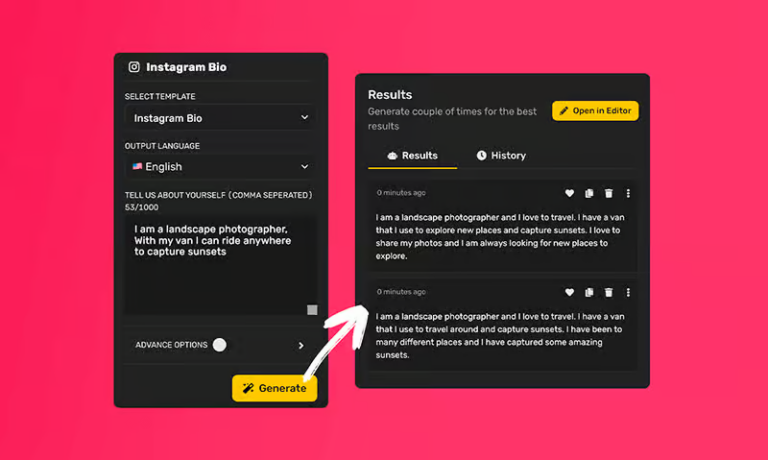
Effective testing and refinement are crucial to ensure that AI-generated Instagram captions resonate with the target audience and fulfill marketing objectives. Once captions are generated, a systematic review process helps identify areas for improvement and ensures the captions align with brand voice, relevance, and engagement standards. This iterative process allows marketers to optimize content continually, resulting in more compelling and effective social media campaigns.Refining AI-generated captions involves assessing their relevance, clarity, and potential to engage viewers.
This process not only involves a meticulous review of each caption but also the strategic combining of multiple suggestions to craft a more refined message. Incorporating user feedback and engagement data from previous campaigns further enhances the precision and impact of future caption generations, creating a cycle of continuous improvement.
Reviewing AI Output for Relevance and Engagement
The initial step in refining captions is a detailed review process that evaluates the relevance to the campaign’s goal and the target audience’s interests. Key aspects to consider include tone consistency, clarity of message, and alignment with current trends or themes. Engagement metrics such as likes, comments, and share rates from past posts can serve as benchmarks to gauge potential effectiveness.To streamline this review, marketers can implement checklists that include criteria such as integration, call-to-action clarity, and emotional appeal.
A comparative analysis of multiple caption options helps identify which versions are most aligned with campaign objectives and audience preferences. Regularly updating these criteria based on evolving audience behavior ensures ongoing relevance.
Strategies for Editing or Combining Multiple Caption Suggestions
Combining elements from various AI-generated captions can yield a more polished and engaging message. This strategy involves selecting the strongest parts of each suggestion—such as compelling hooks from one and clear calls-to-action from another—and editing them into a cohesive caption. This approach maximizes the creative potential of AI outputs while maintaining control over brand voice and messaging.It is advisable to create a structured editing workflow, where each caption suggestion is evaluated for clarity, emotional resonance, and overall impact.
Marketers can use a collaborative review process to gather diverse perspectives, ensuring the final caption benefits from different insights. Additionally, employing tools like HTML tables or lists can help organize multiple options, making the comparison and editing process more efficient.
Using Feedback to Improve Future Explaining Accuracy
The continual improvement of AI caption generation depends on effectively utilizing feedback loops. Data collected from audience interactions, such as click-through rates and conversion metrics, provides valuable insights into what resonates most. This data can be fed back into the AI models, guiding them to generate more relevant and engaging captions over time.Moreover, explicit feedback from content creators—such as notes on tone appropriateness, effectiveness, or the inclusion of brand-specific language—can be systematically documented.
Implementing a structured feedback process enables iterative model training and fine-tuning, leading to more accurate and contextually appropriate caption explanations in future generations. This cycle of learning ensures that AI tools evolve in alignment with evolving market trends and brand strategies.
Best Practices for Using AI-Generated Captions on Instagram
Integrating AI-generated captions into your Instagram marketing strategy can significantly enhance engagement and save valuable time. However, to maximize their effectiveness, it is essential to adopt best practices that ensure your captions resonate with your audience, uphold your brand identity, and deliver measurable results. Proper scheduling, brand consistency, and performance monitoring are critical components of a successful approach that leverages AI tools responsibly and strategically.
Implementing these best practices helps in maintaining a cohesive brand voice, optimizing audience engagement, and continuously refining your content strategy based on data-driven insights. By following structured steps and guidelines, you can effectively utilize AI-generated captions to support your marketing objectives while fostering authentic connections with your followers.
Scheduling and Posting Captions Effectively
Efficient scheduling and timely posting of AI-generated captions are vital for maximizing reach and engagement on Instagram. Proper planning ensures your content aligns with peak activity times of your target audience, thereby increasing visibility and interaction.
- Use Social Media Management Tools: Platforms such as Buffer, Hootsuite, or Later allow for pre-scheduling posts with captions, ensuring consistent posting even during busy periods.
- Align with Audience Activity Patterns: Analyze your follower demographics to determine optimal posting times, typically during mornings, lunch hours, or early evenings when engagement is highest.
- Create a Content Calendar: Develop a calendar to plan caption themes, campaigns, and posting schedules. This promotes consistency and prevents last-minute content gaps.
- Test and Adjust Posting Times: Monitor engagement metrics to refine your scheduling strategy, focusing on times when your audience is most responsive.
Guidelines for Maintaining Brand Consistency with AI Content
Maintaining a consistent brand voice and visual identity in AI-generated captions is crucial for building trust and recognition among your followers. Clear guidelines ensure that AI outputs align with your brand’s personality, values, and messaging style.
Consistency in tone, style, and messaging fosters brand recognition and strengthens audience trust.
- Develop a Brand Style Guide: Define tone of voice, key messaging points, hashtags, and visual elements to serve as reference points for AI caption generation.
- Implement Content Review Processes: Establish a review step where team members verify AI-created captions before posting, ensuring alignment with brand standards.
- Train AI Tools with Brand Data: Feed your AI tools with examples of past successful captions, brand-specific vocabulary, and preferred tone to improve relevance and consistency.
- Regularly Update Guidelines: As your brand evolves, revise your style guide and AI input data to reflect new messaging priorities or tone adjustments.
Monitoring and Analyzing Caption Performance Post-Publication
Effective monitoring and analysis allow you to assess the impact of AI-generated captions, identify areas for improvement, and optimize future content strategies.
- Track Engagement Metrics: Utilize Instagram Insights or third-party analytics tools to measure likes, comments, shares, saves, and overall reach of each caption.
- Analyze Audience Behavior: Examine how different caption styles, lengths, or s influence audience interactions and adjust your AI prompts accordingly.
- Identify Top-Performing Captions: Recognize patterns in high-performing captions to inform future AI outputs, emphasizing successful themes, calls-to-action, or hashtags.
- Gather Qualitative Feedback: Monitor comments and direct messages to gauge audience sentiment and gather insights on how your captions resonate emotionally and contextually.
- Implement Data-Driven Refinements: Regularly update your AI training data and caption templates based on analytical insights to enhance relevance and engagement over time.
Epilogue
In conclusion, utilizing AI to generate Instagram ad captions offers a powerful advantage for marketers seeking efficiency and creativity. By carefully selecting tools, preparing thoughtful inputs, and continuously refining outputs, you can produce captivating captions that enhance engagement and drive results. Embracing this technology positions your brand for success in the dynamic world of social media advertising.