Discover how to personalize marketing automation with AI and unlock new levels of customer engagement. By integrating advanced artificial intelligence techniques, businesses can craft highly tailored experiences that resonate with individual preferences and behaviors. This approach not only enhances customer satisfaction but also drives better conversion rates and long-term loyalty.
Understanding the role of AI in marketing automation involves exploring its core functions in delivering personalized content, segmenting audiences dynamically, and automating customer journeys. As AI technology continues to evolve, it empowers marketers to analyze vast amounts of data in real-time, enabling precise targeting and meaningful interactions across multiple channels.
Understanding the Role of AI in Marketing Automation

Artificial Intelligence (AI) has become a transformative force within marketing automation, reshaping how businesses engage with their audiences. By integrating AI technologies, companies can automate complex tasks, analyze vast data sets, and deliver highly personalized experiences at scale. This evolution has significantly enhanced the efficiency, accuracy, and effectiveness of marketing campaigns, leading to improved customer engagement and conversion rates.
Over recent years, the integration of AI into marketing automation systems has shifted the landscape from generic, one-size-fits-all approaches to nuanced, data-driven personalization strategies. This progression enables marketers to target individual preferences and behaviors with precision, fostering stronger relationships and loyalty. As AI continues to advance, its role in marketing automation is expected to deepen, offering even more sophisticated tools for customer insights and campaign optimization.
Core Functions of AI in Marketing Automation Systems
AI encompasses several core functionalities that fundamentally improve marketing automation processes. These include data analysis, machine learning, natural language processing, and predictive analytics. Each of these functions contributes to creating a more dynamic and responsive marketing environment:
- Data Analysis: AI systems process large volumes of customer data to identify patterns, preferences, and behaviors that are not immediately apparent through traditional analysis.
- Machine Learning: Algorithms continuously learn from new data, refining their predictions and automating decision-making processes based on evolving customer interactions.
- Natural Language Processing (NLP): NLP enables AI to understand, interpret, and generate human language, facilitating personalized communication through chatbots, email responses, and content recommendations.
- Predictive Analytics: AI forecasts future customer actions, such as purchase likelihood or churn risk, allowing marketers to proactively tailor their strategies.
Enhancement of Personalization Efforts through AI
Personalization in marketing refers to tailoring messages, offers, and content to individual customers based on their specific preferences and behaviors. AI significantly amplifies these efforts by enabling real-time, data-driven insights that are unattainable through manual or rule-based mechanisms:
- The ability to analyze multiple data sources simultaneously—including browsing history, purchase patterns, social media activity, and demographic information—provides a comprehensive view of each customer.
- AI-driven segmentation allows for dynamic grouping of customers based on their current behaviors and predicted needs, resulting in more relevant targeting.
- Content personalization is enhanced through AI algorithms that recommend products, articles, or offers tailored to individual interests, increasing engagement and conversion rates.
- Automated personalization at scale ensures that every customer receives relevant communication, regardless of the size of the audience, without sacrificing quality or relevance.
Example: An online retailer uses AI to analyze customer browsing history and purchase data, enabling it to send personalized product recommendations via email and push notifications, thereby increasing cross-sell and upsell opportunities.
Evolution of Marketing Automation with AI Integration
The integration of AI into marketing automation has marked a significant evolution over recent years. Initially, automation focused on simple rule-based workflows that triggered basic responses. Today, AI-powered systems are capable of autonomous decision-making, predictive modeling, and nuanced customer interactions. This evolution is driven by advancements in machine learning algorithms, big data processing, and natural language understanding.
In the past, marketing automation was largely limited to email drip campaigns and basic segmentation. Now, AI enables real-time personalization, dynamic content delivery, and sophisticated customer journey mapping. For example, major e-commerce platforms like Amazon leverage AI to recommend products based on browsing and purchase history, continually refining their suggestions to maximize sales. Similarly, social media platforms utilize AI for targeted advertising, delivering ads that are highly relevant to individual users based on their online behavior.
| Feature | Traditional Automation | AI-Powered Personalization | Impact |
|---|---|---|---|
| Customer Segmentation | Static, rule-based segments | Dynamic, behavior-based segmentation | Higher relevance and engagement |
| Content Delivery | Scheduled or rule-based | Real-time, personalized content | Increased interaction and conversions |
| Data Analysis | Manual or semi-automated | Automated, continuous learning | Deeper insights and predictive capabilities |
| Customer Engagement | Limited to predefined triggers | Proactive, predictive engagement | Enhanced customer experience and loyalty |
Collecting and Analyzing Customer Data for Personalization
Effective personalization in marketing automation hinges on the ability to gather comprehensive customer data across multiple channels and analyze it to uncover actionable insights. Utilizing diverse data collection methods and sophisticated analysis techniques enables businesses to tailor their marketing efforts precisely to individual customer preferences and behaviors, enhancing engagement and conversion rates.
In the realm of AI-driven marketing, data collection and analysis serve as the foundational pillars that determine the success of personalization strategies. By systematically organizing customer data, companies can identify patterns, segment audiences effectively, and deliver personalized experiences that resonate deeply with each customer segment. This process involves not only gathering data but also understanding how to interpret behavioral signals in real-time, allowing for dynamic and timely marketing interventions.
Methods for Gathering Customer Data Across Multiple Channels
To build a holistic view of each customer, businesses must leverage various data collection methods spanning online and offline channels. A multi-channel approach ensures that all touchpoints are captured, providing a richer dataset for analysis.
- Website Interactions: Tracking page visits, time spent, click-through rates, and form submissions through web analytics tools such as Google Analytics or heatmaps.
- Social Media Engagement: Monitoring likes, shares, comments, and direct messages across platforms like Facebook, Instagram, and Twitter to understand customer interests and sentiment.
- Email Campaigns: Analyzing open rates, click rates, and conversion metrics from email marketing platforms to gauge content relevance and engagement.
- Mobile App Usage: Collecting data on app sessions, feature usage, and push notification responses through mobile analytics SDKs.
- In-Store Interactions: Using loyalty programs, QR codes, or in-store sensors to track physical customer behaviors and preferences.
- Customer Service Interactions: Recording inquiries, complaints, and feedback from call centers, chatbots, or in-person visits to understand customer concerns and expectations.
Integrating data from these diverse sources requires robust data management systems and privacy compliance measures to ensure data accuracy and security.
Organizing Customer Data Using HTML Tables for Clear Segmentation
Structured organization of customer data facilitates targeted analysis and segmentation. Creating clear, well-structured HTML tables allows marketers to visualize and categorize data efficiently.
| Customer Attribute | Data Description | Example |
|---|---|---|
| Demographics | Age, gender, location, income level | 25-34, female, New York City, $50K-$75K |
| Behavioral Data | Browsing history, purchase patterns, preferred channels | Frequent mobile shopper, abandoned cart items |
| Engagement Metrics | Interaction frequency, content preferences, responsiveness | Clicks on promotional emails, social media activity |
| Transactional Data | Purchase dates, amounts, product categories | Last purchase: 3 days ago, spent $120 on electronics |
| Feedback & Preferences | Customer reviews, survey responses, expressed interests | Prefers eco-friendly products, interested in discounts |
Segmenting data based on these categories enables precise targeting and personalized messaging tailored to each group’s unique characteristics.
Analyzing Behavioral Data to Identify Personalization Opportunities
Behavioral data analysis reveals valuable insights into customer preferences, habits, and potential needs. By examining patterns within this data, businesses can discover opportunities for tailored marketing interventions that enhance relevance and engagement.
Analyzing behavioral signals involves tracking actions such as website navigation paths, product views, and response times, which illuminate customer interests and intent. For example, a customer frequently browsing outdoor gear may be receptive to targeted promotions for related products. Similarly, identifying customers who abandon shopping carts can trigger automated follow-up messages offering discounts or assistance.
Behavioral analysis enables predictive modeling that anticipates future actions based on historical data, thus allowing marketers to personalize interactions proactively.
Advanced AI algorithms process vast amounts of behavioral data in real-time, enabling dynamic segmentation and personalized content delivery. This real-time processing is critical, as it ensures that marketing messages are timely and contextually relevant, significantly improving the chances of conversion.
For instance, real-time AI analysis can detect a customer viewing a specific product category and immediately present personalized recommendations or special offers, thereby increasing the likelihood of purchase.
Building Customer Segments with AI
Creating effective customer segments is fundamental to personalized marketing automation. Leveraging AI enables marketers to develop dynamic, precise segments that adapt in real-time to changing customer behaviors and data. This approach transforms static groupings into fluid audiences that reflect current preferences and interactions, thereby increasing engagement and conversion rates.
AI-driven segmentation involves analyzing vast datasets to identify meaningful patterns and similarities among customers. Unlike traditional segmentation, which relies on broad demographic categories, AI uncovers micro-segments characterized by nuanced attributes, allowing for highly targeted and relevant marketing efforts. This process not only enhances personalization but also optimizes resource allocation by focusing efforts on the most receptive audiences.
Developing Dynamic Customer Segments with AI Insights
Building dynamic customer segments begins with collecting diverse data sources, including website interactions, purchase history, social media engagement, and customer feedback. AI algorithms analyze this data to identify clusters of customers sharing similar behaviors, preferences, or needs. These insights form the foundation of segments that can evolve as new data becomes available.
Implementing machine learning models such as clustering algorithms (e.g., K-Means, DBSCAN) or deep learning techniques facilitates the creation of these segments. These models evaluate multiple variables simultaneously, uncovering hidden patterns that manual analysis might overlook. As customer behaviors shift over time, AI continually reassesses and refines segments, ensuring they remain relevant and actionable.
Automating Segment Updates with AI
Maintaining accurate segments requires ongoing updates as fresh data flows into the system. AI automates this process through continuous learning mechanisms, where new customer interactions are instantly incorporated into the analysis. This real-time updating ensures segments accurately reflect current customer states, enabling immediate adjustments to marketing strategies.
Procedures for automating updates typically involve setting predefined rules or leveraging adaptive algorithms that recalibrate clusters periodically or upon specific triggers. For instance, if a customer’s engagement level drops or shifts to a new interest, AI can reassign them to a different segment automatically. This dynamic adjustment promotes personalized content delivery and enhances customer experience.
Sample HTML Table for Customer Segmentation Parameters and Criteria
Employing structured data representations like HTML tables helps visualize various segmentation parameters. Below is an illustrative example encompassing common criteria used in AI-powered segmentation:
| Parameter | Description | Example Criteria |
|---|---|---|
| Purchase Frequency | Number of purchases within a specific time frame | Frequent (>5 per month), Occasional (1–4 per month), Inactive (0) |
| Customer Engagement | Interaction levels with marketing channels | Email opens, click-through rates, social media interactions |
| Demographic Data | Basic demographic information such as age, location, gender | Age groups, regional segments, gender-specific preferences |
| Behavioral Attributes | Actions and patterns indicating preferences or needs | Browsing history, product preferences, cart abandonment |
| Customer Value | Lifetime value or recent transaction value | High-value, Mid-value, Low-value customers |
“Effective segmentation is the backbone of personalized marketing; AI empowers marketers to identify, update, and act on micro-segments that traditional methods often overlook.”
Identifying Micro-Segments for Hyper-Personalized Marketing
Micro-segmentation involves dividing customers into highly specific groups based on minute behavioral and demographic differences. AI excels at detecting these micro-segments by analyzing multidimensional data, revealing niche groups with distinct needs or preferences. This level of granularity allows for hyper-personalized marketing that resonates strongly with individual customers.
Techniques such as predictive analytics and anomaly detection help uncover these micro-segments. For example, AI might identify a subset of customers who frequently browse high-end products but rarely purchase, suggesting targeted campaigns emphasizing exclusivity or special offers. Recognizing these micro-segments enables marketers to craft tailored messages that significantly improve engagement and conversion, fostering stronger customer relationships.
Developing Personalized Content Strategies Using AI
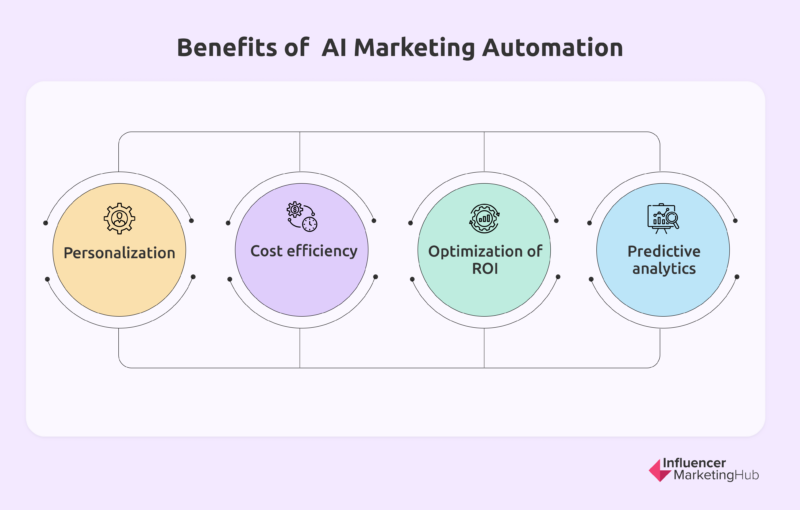
Creating highly targeted and relevant content has become a cornerstone of effective marketing automation. By leveraging AI, marketers can craft personalized content strategies that resonate deeply with individual customers, thereby boosting engagement, conversion rates, and loyalty. AI-driven personalization not only enhances user experience but also optimizes resource allocation by delivering the right message to the right audience at the right time.
In this section, we explore how AI can be utilized to generate tailored content recommendations, customize messaging across various channels, and design a strategic content plan that aligns with customer preferences and behaviors. These approaches enable businesses to deliver relevant, compelling content that fosters meaningful connections with their audience.
Generating Tailored Content Recommendations for Individual Users
AI algorithms analyze vast amounts of customer data, including browsing history, purchase patterns, and interaction logs, to identify content preferences unique to each user. Collaborative filtering and content-based filtering techniques enable AI to suggest relevant articles, products, or videos that align with individual interests. Machine learning models continuously refine recommendations based on real-time user interactions, ensuring content remains personalized and engaging.
“AI-driven recommendation engines can increase conversion rates by up to 30%, as they deliver content that aligns precisely with user intent.”
Leveraging AI to Customize Email, Web, and Social Media Messaging
Personalization extends beyond recommendations to dynamic messaging across various digital touchpoints. AI tools enable the customization of email subject lines, body content, and call-to-actions based on recipient behavior, demographics, and preferences. On websites, AI-powered chatbots and content modules adapt in real-time to visitor profiles, presenting relevant offers or information. Similarly, social media platforms utilize AI to tailor ad targeting, post timing, and content formats to maximize user engagement.
For instance, an e-commerce retailer might send personalized product recommendations via email based on recent browsing activity, while social media ads are optimized to showcase items similar to those previously viewed or purchased by the user.
Content Types Suited for AI Personalization
Certain content formats are especially conducive to AI-driven personalization due to their flexibility and impact. These include:
- Product recommendations and dynamic landing pages that adapt based on user behavior.
- Personalized emails with customized offers, product suggestions, or content tailored to user segments.
- Interactive content such as quizzes or assessments that adjust questions based on prior responses.
- Social media content variations, including targeted posts and sponsored ads designed for specific audiences.
- Video content that dynamically changes based on viewer preferences or previous interactions.
Sample Content Plan with Personalization Tactics
Implementing a structured content plan ensures consistent delivery of personalized messaging aligned with customer segments and engagement goals. The following table illustrates a sample plan emphasizing content formats, target segments, and personalization tactics:
| Content Format | Target Segment | Personalization Tactics |
|---|---|---|
| Product Recommendation Email | Frequent buyers and cart abandoners | Use purchase history and browsing data to suggest relevant products; include personalized discount codes |
| Personalized Web Landing Pages | New visitors vs. returning customers | Adjust homepage banners and featured products based on referral source and prior interactions |
| Social Media Sponsored Posts | Demographics-based segments (age, location, interests) | Targeted ads with content tailored to user interests and behaviors, optimized for peak engagement times |
| Interactive Quizzes | Potential customers evaluating products or services | Customize questions based on previous responses to guide users toward suitable solutions |
| Video Content Campaigns | Existing customers with specific preferences | Use AI to select and personalize video messages that highlight features relevant to individual users |
Automating Customer Journeys with AI
Implementing automated, personalized customer journeys driven by AI enhances engagement, increases conversion rates, and fosters long-term loyalty. By leveraging AI’s predictive capabilities and real-time data insights, marketers can design seamless, dynamic pathways that respond intelligently to customer behaviors and preferences.
AI-powered automation transforms traditional linear marketing funnels into adaptive, multi-touchpoint experiences. This approach ensures that each customer interaction is relevant, timely, and personalized, thereby increasing the overall effectiveness of marketing efforts and customer satisfaction.
Designing Procedures for AI-Driven Customer Journeys
Creating automated, personalized customer journeys involves developing structured procedures that utilize AI’s predictive analytics and behavioral data. These procedures must incorporate clear trigger points, decision logic, and adaptive pathways to guide customers through the journey seamlessly.
- Identify key customer behaviors and interactions that serve as trigger points, such as website visits, cart abandonment, or content engagement.
- Define personalized actions for each trigger, including targeted emails, special offers, or personalized content delivery.
- Utilize AI models to predict customer intent and future actions, enabling proactive engagement strategies.
- Implement a feedback loop where AI continuously learns from ongoing customer interactions to refine journey pathways.
Triggering Actions Based on Customer Interactions
AI enables real-time response capabilities, allowing marketing automation systems to trigger specific actions immediately upon detecting customer interactions. This responsiveness enhances relevance and fosters a more engaging experience.
Actions triggered by AI include sending personalized product recommendations when a customer browses a category, or re-engagement emails after detecting inactivity.
- Behavioral triggers such as page visits, time spent on specific content, or previous purchase history.
- Interaction-based triggers like clicking a link, filling out a form, or adding items to a shopping cart.
- Predictive triggers that anticipate customer needs based on past data, prompting preemptive outreach.
- Exit intents or abandonment signals that prompt timely retargeting efforts.
Structuring Multi-step Automation Flows
Designing effective multi-step automation flows requires a clear structure that maps customer journeys through various stages, with AI-driven decision points directing progression based on individual behaviors.
| Stage | Customer Action | AI-Driven Decision Point | Automated Response |
|---|---|---|---|
| Onboarding | Sign-up or registration | Identify new users and segment them based on demographics or source | Send a personalized welcome email with tailored content |
| Engagement | Content interaction or website visit | Predict interest level using AI scoring models | Recommend relevant products or articles |
| Conversion | Add to cart or initiate checkout | Assess likelihood of purchase with predictive analytics | Trigger discount offer or reminder email |
| Post-Purchase | Complete purchase or leave feedback | Evaluate customer satisfaction and loyalty potential | Send personalized follow-up and loyalty rewards |
Optimizing Journey Stages with AI Insights
Continuous optimization of customer journeys is crucial to maintaining relevance and effectiveness. AI insights enable marketers to analyze performance metrics, identify bottlenecks, and refine each stage of the journey.
- Leverage AI analytics to monitor key performance indicators such as engagement rates, conversion rates, and customer lifetime value.
- Use machine learning models to identify the most effective touchpoints and content types for different customer segments.
- Implement A/B testing powered by AI to discover optimal messaging, timing, and offers.
- Adjust automation workflows dynamically based on real-time data, ensuring each customer receives the most relevant interactions.
Leveraging AI for Predictive Analytics and Scoring
In the evolving landscape of marketing automation, AI-driven predictive analytics and scoring systems have become essential tools for understanding customer behavior and enhancing personalization strategies. These technologies enable marketers to anticipate future actions, prioritize leads, and tailor experiences based on data-driven insights, ultimately increasing engagement and conversion rates.
By harnessing AI models to analyze vast amounts of customer data, businesses can develop sophisticated scoring systems that accurately predict customer needs and the likelihood of purchasing. Integrating these predictive scores into marketing workflows allows for more targeted campaigns, optimized resource allocation, and improved customer relationships.
Understanding AI-Based Customer Prediction
AI models, particularly machine learning algorithms, analyze historical customer data to identify patterns and trends that signal future behavior. These models consider various factors such as browsing history, purchase history, engagement levels, demographic information, and even real-time interactions. The output is a predictive forecast of a customer’s future actions, such as their propensity to buy, churn risk, or engagement likelihood.
For example, a retail company might use AI to analyze past purchase data and online activity to predict which customers are most likely to respond to a promotional offer. This allows marketers to prioritize high-potential prospects and customize messaging accordingly. Accurate predictions enable more efficient marketing spend and more meaningful customer interactions.
Implementing AI-Driven Customer Scoring Systems
To leverage AI for customer scoring, organizations typically follow these key steps:
- Data Collection: Gather comprehensive customer data from multiple sources, including CRM systems, website analytics, social media, and transaction records.
- Model Training: Use machine learning algorithms to train predictive models on historical data, ensuring they can identify relevant patterns associated with desired outcomes.
- Score Generation: Apply trained models to current customer data to generate scores that reflect the likelihood of specific behaviors, such as purchasing or churn.
- Calibration and Validation: Continuously test and adjust the scoring models to improve accuracy, incorporating new data to keep predictions relevant.
- Integration: Embed the scoring system into marketing automation platforms to inform campaign targeting, segmentation, and personalization efforts.
Predictive Analytics Output Example
“Customer A has an 85% likelihood of making a purchase within the next 30 days based on recent engagement and past buying patterns.”
This type of output provides actionable insights that enable marketers to prioritize outreach efforts effectively. For instance, customers with high scores can receive personalized offers or tailored messaging designed to convert them, while those with lower scores might be nurtured through other channels or re-engagement campaigns.
Integrating AI-Driven Scores into Marketing Workflows
To maximize the value of predictive scoring, it is crucial to embed these insights seamlessly into marketing automation workflows. The process involves:
- Syncing scores with customer profiles within the CRM or marketing platform.
- Setting up rules and triggers based on score thresholds to automate actions such as sending targeted emails, offering discounts, or initiating follow-up calls.
- Personalizing content dynamically based on predicted customer needs and behaviors, enhancing the overall customer experience.
- Monitoring the performance of predictive scores and adjusting models regularly to maintain accuracy and relevance.
By integrating AI-powered predictive analytics and scoring into your marketing automation, you can proactively address customer needs, increase conversion rates, and foster stronger customer relationships through precise and timely interactions.
Personalization Through AI-Enabled Chatbots and Virtual Assistants
AI-powered chatbots and virtual assistants have emerged as essential tools for delivering personalized customer experiences at scale. By leveraging customer data and sophisticated natural language processing, these intelligent agents can engage users in meaningful conversations tailored to individual preferences, behaviors, and purchase history. This personalization enhances customer satisfaction, fosters brand loyalty, and drives conversion rates by providing timely, relevant support and recommendations.
Implementing AI-enabled chatbots involves designing conversation flows that adapt dynamically to each user’s profile, ensuring interactions feel natural, consistent, and relevant. As part of a comprehensive marketing automation strategy, these virtual assistants serve not only as customer support channels but also as strategic tools for guiding users through personalized journeys, offering targeted suggestions, and collecting valuable feedback for ongoing optimization.
Designing AI-Powered Chatbots Tailored to Customer Profiles
Effective chatbots are built on detailed customer profiles, which include demographics, past interactions, browsing behavior, and purchase history. These profiles enable the chatbot to recognize individual users and deliver customized responses that resonate with their unique preferences and needs. The design process involves creating natural language understanding (NLU) models capable of interpreting diverse user inputs and matching them with appropriate intents and entities derived from customer data.
Personalization begins at the onboarding stage, where the chatbot gathers initial preferences and context, and continues through ongoing interactions that adapt based on real-time data. Incorporating machine learning algorithms allows the chatbot to learn from each conversation, enhancing its ability to predict user needs and refine its responses over time.
Delivering Personalized Recommendations and Support
Chatbots can serve as personalized shopping assistants by analyzing customer profiles and browsing history to suggest relevant products or services. For example, an e-commerce chatbot might recommend accessories that complement previous purchases or highlight promotions aligned with a customer’s interests. Moreover, virtual assistants can provide tailored support by addressing specific issues based on past interactions, thereby reducing resolution time and increasing satisfaction.
These chatbots can also proactively offer assistance, such as suggesting alternative products if a preferred item is out of stock or providing personalized content based on user preferences. This proactive engagement fosters a sense of individualized attention, strengthening the overall customer experience.
Organizing Chatbot Conversation Flows for Clarity
Structured conversation flows are crucial for ensuring consistency and personalization in chatbot interactions. The following table illustrates typical conversation pathways designed to adapt to different customer profiles and intents:
| Customer Intent | Profile Data Utilized | Sample Conversation Flow |
|---|---|---|
| Product Inquiry | Browsing history, purchase preferences |
|
| Support Request | Previous support tickets, feedback history |
|
| Order Tracking | Order history, delivery preferences |
|
Maintaining Conversational Consistency and Personalization
Best practices for chatbot design emphasize maintaining a coherent and personalized tone throughout interactions. Consistency involves using customer-specific language, remembering past preferences, and ensuring responses align with brand voice. Personalization requires dynamically adapting conversation content based on real-time data, behavioral cues, and contextual information.
To achieve this, organizations should deploy continuous learning mechanisms that update customer profiles after each interaction, enabling the chatbot to improve future engagement. Regularly reviewing conversation logs helps identify areas where personalization can be enhanced, such as adjusting recommendations or refining the tone to better match individual customer personalities. Additionally, integrating feedback loops allows the chatbot to learn from user responses and improve its accuracy and relevance over time.
Overall, designing AI chatbots that deliver personalized, consistent, and context-aware interactions significantly elevates the customer experience, fostering deeper engagement and long-term loyalty.
Measuring Effectiveness of AI Personalization in Marketing Automation
Evaluating the performance of AI-driven personalization strategies is essential to ensure that marketing efforts yield the desired outcomes. Accurate measurement enables organizations to understand the impact of their initiatives, optimize ongoing campaigns, and justify investments in AI technologies. Establishing clear metrics and systematic tracking processes forms the foundation for continuous improvement in personalized marketing automation.
Effective measurement involves a combination of quantitative and qualitative data collection, analysis of user interactions, and assessment of overall customer satisfaction. This comprehensive approach helps marketers identify areas of success and opportunities for refinement, ultimately leading to more targeted, engaging, and profitable marketing campaigns.
Key Metrics to Evaluate Personalized Marketing Efforts
Identifying relevant key performance indicators (KPIs) is critical for assessing the success of AI-driven personalization. These metrics should align with business goals and customer engagement objectives, providing insights into both short-term responses and long-term customer loyalty.
- Engagement Metrics: Measures of how users interact with personalized content, including click-through rates (CTR), time spent on page, bounce rate, and interaction depth.
- Conversion Rates: The percentage of users completing desired actions, such as making a purchase, subscribing to a newsletter, or filling out a lead form.
- Customer Satisfaction Scores: Quantitative indicators like Net Promoter Score (NPS) and Customer Satisfaction (CSAT) ratings, reflecting overall customer sentiment towards personalized experiences.
- Retention and Loyalty Metrics: Repeat purchase rate, customer lifetime value (CLV), and churn rate help evaluate the long-term effectiveness of personalization efforts.
Procedures for Tracking Engagement, Conversions, and Customer Satisfaction
Implementing a structured approach for data collection and analysis ensures accurate measurement of personalization efforts. The process involves integrating analytics tools with marketing automation platforms, setting up tracking codes, and establishing reporting frameworks.
- Data Collection: Utilize tracking pixels, cookies, and event-based tags to monitor user interactions across channels and devices.
- Analytical Tools: Leverage platforms like Google Analytics, customer data platforms (CDPs), and AI-powered dashboards to aggregate and interpret data.
- Segmentation and Attribution: Attribute engagement and conversions to specific personalized campaigns or content variants, enabling precise assessment of AI effectiveness.
- Customer Feedback: Collect satisfaction data through surveys, reviews, and direct feedback channels to complement behavioral metrics with qualitative insights.
Templates for Reporting Results Using HTML Tables or Blockquotes
Consistent and clear reporting facilitates stakeholder understanding and informs decision-making. Below are templates illustrating how to present key metrics and insights in a structured format.
Sample Marketing Performance Report
Metric Target Actual Variance Comments Click-Through Rate (CTR) 15% 17.2% +2.2% Personalized subject lines increased engagement Conversion Rate 5% 4.8% -0.2% Minor decline; consider optimizing CTA placement Customer Satisfaction (CSAT) 85% 87% +2% Positive feedback on personalized recommendations Repeat Purchase Rate 20% 22.5% +2.5% Effective loyalty personalization strategies
Such templates support transparent communication of results, highlighting successes and areas for improvement. They serve as a foundation for data-driven decisions and strategic adjustments.
Continuous Improvement Strategies Based on Performance Data
Regularly analyzing performance metrics enables marketers to refine their personalization tactics effectively. Employing an iterative approach ensures that AI models adapt to evolving customer preferences and market conditions.
- A/B Testing: Experiment with different content variants, personalization parameters, and automation workflows to identify the most effective strategies.
- Model Optimization: Use performance data to retrain and fine-tune AI algorithms, enhancing accuracy and relevance over time.
- Feedback Loop Integration: Incorporate customer feedback and behavioral insights into model adjustments, ensuring personalization remains customer-centric.
- Benchmarking: Compare results against industry standards and historical data to measure relative success and identify growth opportunities.
Implementing a structured review process, complemented by ongoing experimentation and learning, ensures that AI-powered marketing automation continues to deliver personalized experiences that resonate with customers and drive measurable business outcomes.
End of Discussion

In conclusion, mastering how to personalize marketing automation with AI offers a strategic advantage in today’s competitive landscape. By leveraging AI-driven insights, content customization, and automated customer journeys, businesses can create more relevant and impactful marketing efforts. Staying focused on continuous optimization ensures sustained success and deeper connections with customers.